
15 September 2026
Window Fitting Day In Exeter: The Mess, What 'Making Good' Means And Who Repairs The Plaster

Almost every guide to replacing windows in Exeter covers the quote, the glass and the guarantee. Very few describe the day itself, which is the part homeowners actually ring up about afterwards. A standard casement swap takes a couple of hours, a full house takes a day or two, and in that time the inside edge of every opening in your home gets broken apart and put back together. That is where the arguments start. One line in a quote - “making good included” - has no fixed legal meaning, and two firms quoting within £200 of each other can mean completely different things by it. Since October 2015 the Consumer Rights Act has governed what happens when work falls short, but it works far better as a backstop than as a plan. This is what the mess actually looks like, what making good does and does not cover, and how to handle it when something needs putting right.
Before The Van Arrives: What The Fitters Actually Need
The prep takes twenty minutes and it saves an argument. Clear every windowsill completely, including the things you stopped noticing years ago - plants, photo frames, the radiator key, candles. Move furniture back about a metre from each window and pull sofas away from the wall rather than just sliding them along it. Curtains, blinds, poles and tracks all come down; a fitter who has to take your blinds down is not responsible for the bracket holes left behind, and most will not refit them either.
Three things get forgotten. Alarm contacts fitted to old frames will not transfer to the new ones, so speak to your alarm company beforehand and know whether the system needs isolating on the day. Trickle vents, restrictors and any child safety catches should already be on the survey, but a quick walk round with the fitter at 8am catches anything the surveyor missed. And parking matters more than people think in Exeter - a crew carrying glazed units up St Leonard’s or the terraced streets off Blackboy Road needs somewhere to leave a long wheelbase van within carrying distance. If you are on a permit street, sort a visitor permit with the council in advance. When we book window installation in Exeter the parking question gets asked at survey stage, because a 40 metre carry with sealed units adds real time to a job.
What Comes Out, And What Comes With It
Old windows do not lift out. In a modern cavity wall the frame is fixed with screws or fixing lugs into the reveal, and the plaster edge is butted tight against it. Getting the frame out means cutting the fixings and breaking that plaster line, so the first thing that happens is a strip of plaster around the opening lets go. That is normal, it is not damage, and it happens on every job.

On Exeter’s older stock it goes further. In the Victorian and Edwardian terraces around Newtown, Mount Pleasant and St Thomas, the original frames were built into the wall as it went up rather than dropped into a formed opening afterwards. A century of paint, putty and lime mortar has bonded everything together. When the frame comes away it can bring a fist-sized lump of the reveal with it, and behind that you often find rubble fill rather than anything solid to fix into. Deep reveals make the loss more obvious too, because there is more surface on show.
Cob is the other Exeter complication. Devon has a large surviving stock of earth-walled buildings and you meet them on the city fringes and out through the villages towards Broadclyst and Whimple. Cob walls are soft, irregular and finished in lime, and they are unforgiving of anyone who attacks them with a multi-tool. On those properties the removal is slow and deliberate, and the making good is a lime job rather than a gypsum one.
The Outside Of The Opening: Render, Mortar And Sills
Outside, the damage is usually smaller but more visible from the pavement. A frame sitting in brickwork is bedded in mortar, so pulling it out chips the mortar joints and sometimes an arris off a brick. A frame in render leaves a clean scar where the render was run up to the old frame, and render never matches - a patch on a wall painted eight years ago will always read as a patch until the elevation is repainted.
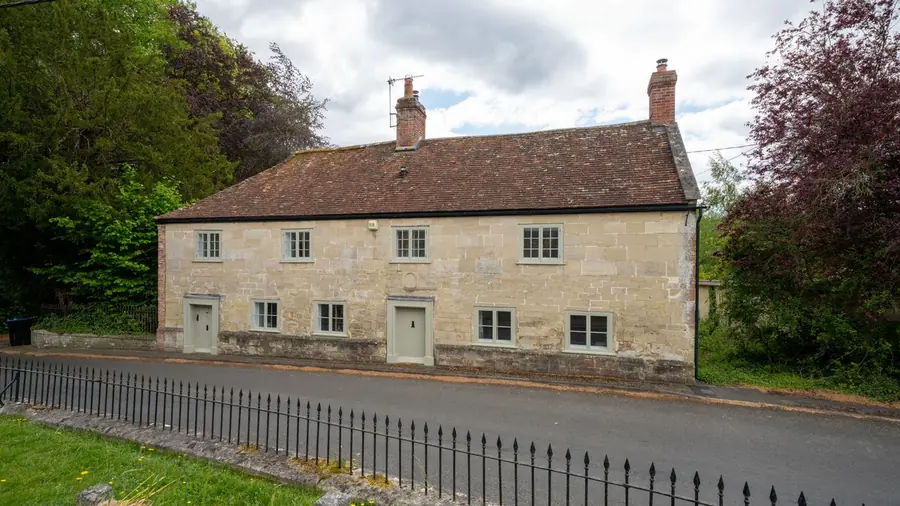
Sills cause the most surprises. Old timber sub-sills on Exeter terraces are often rotten underneath where nobody has looked, and a decision has to be made on the day about whether to replace the sub-sill or fit a uPVC sill over it. Replacing is the right answer and it is usually chargeable, because the surveyor priced a window, not carpentry. Ask at survey stage what happens if a rotten sub-sill turns up, and get the answer in the quote.
If you are in a rendered or cob property, push your installer on one point. Cement render and gypsum plaster trap moisture in a solid wall that was built to breathe. Patch a Devon cob or lime-rendered wall with sand and cement and it looks fine for two winters, then it blows the render off around it. Lime costs more and cures slowly. Agree it before anyone mixes anything.
”Making Good” - The One Line That Causes Most Of The Arguments
There is no legal definition of making good. It is a trade phrase, and what it covers is whatever your contract says it covers, which on most quotes is nothing at all beyond the two words themselves.

What it almost always includes: internal uPVC trim or architrave covering the broken plaster edge, a run of silicone between trim and wall, external mastic sealing the frame to the brickwork or render, mortar pointed up where the frame sits, sill end caps, and removal of the old frames and all debris from site. That is a reasonable standard of work and for a modern house with shallow reveals it genuinely looks finished.
What it almost never includes: plastering, painting or decorating, replacing or refitting blinds and curtains, matching render across an elevation, tiling where a kitchen or bathroom tile line meets the reveal, carpet or flooring repair, or anything to do with the alarm. The FENSA guidance for homeowners is worth reading before you sign anything, since a registered installer self-certifies the Building Regulations side of the job and that certification says nothing at all about decorative finish.
So ask one question before you sign: “if the plaster comes away when the frame comes out, who makes it flat again and is that in this price?” Write the answer into the contract. It costs nothing at quote stage and it removes the entire dispute.
Trim And Silicone, Or A Genuine Plaster Repair?
These are two different products at two different prices and they are not interchangeable, so it helps to know which one you are buying.

Trim is quick. A uPVC angle or flat trim is cut, bonded and siliconed over the damaged edge in a few minutes per window, it is colour-matched to the frame, and it never needs painting. On a 1970s or 1980s Exeter semi with shallow reveals and plain plasterboard walls, it looks entirely at home and most people never think about it again.
Plaster is slow. The loose material gets hacked back to something solid, a bonding coat fills the depth, then a finish skim brings it flush with the wall, and the whole reveal is left to dry for several days before it takes a mist coat. On a Victorian terrace with 300mm reveals and moulded detail, plaster is the only finish that looks right; a plastic trim on a deep period reveal looks exactly like what it is.
Who actually does the plastering
Some window firms have a plasterer they subcontract and will price it as a line item, usually per window. Others will not touch it, which is fair enough - it is a separate trade and a poor skim is worse than no skim. If you are arranging it yourself, book the plasterer for two or three days after the fitters rather than the same day, so the frames are in, the silicone has skinned and the reveals have stopped moving. Then leave the paint alone until the plaster has gone evenly pale.
Bays, Big Openings And The Jobs Where This Gets Serious
A bay is not one window. It is three or more units meeting at corner posts, sitting on a bay cill, often carrying load from the wall above, and it is the job where making good stops being cosmetic.

On a bay, more of the internal finish comes away, because there are more junctions and the corner posts sit where plaster meets plaster at an angle. Expect the reveals, the head and often a strip of ceiling line to need attention. On Exeter’s bay-fronted terraces, where the bay is frequently rendered or has stone detail, the external patching is visible from the street and the render match matters more.
Large openings - patio doors, a knocked-through kitchen window, a wide French door set - bring the same issue in a different shape, plus the question of temporary support. If a structural opening is involved the installer should say so at survey and the price should reflect propping. If nobody has mentioned it and the opening is more than about two and a half metres wide, ask. For the sequencing of all this against everything else going on in the house, the timings in our guide to how long window installation takes in Exeter are the ones to plan around.
Dust, Security And A Job That Runs Into A Second Day
Dust sheets catch debris. They do not catch dust. Fine plaster particles get into curtains, carpet pile, bookshelves and the top of every picture frame in the room, and they are still turning up a week later on a windowsill you have already cleaned twice. Anyone who has lived through a job like this knows the feeling. Close internal doors, take soft furnishings out of the room entirely if you can, and accept that a proper clean after the crew leaves is part of the project.

Security is not negotiable. Whatever state the internal finishing is in at the end of the day, every opening that has been started should be closed, glazed, locked and weathertight before the van leaves. If a frame turns up damaged or a unit is the wrong size, the opening gets boarded and screwed from inside and the installer should tell you plainly rather than leaving you to discover it at bedtime. An installer who opens a fourth window at half past three on a short winter afternoon is making a scheduling decision you will pay for, so it is a fair thing to raise at 2pm rather than 5pm.
If the job does run over, the work that carries into day two should be trim, sealant, adjustments and making good - not glazing. Ask on the first morning what the plan is if the weather turns. Exeter sits in a river valley and a wet afternoon in the Exe basin is not unusual, and a driving rain on an open aperture is a genuine reason to stop.
Snagging, Final Payment And Where You Actually Stand
Do the walk round while the fitters are still there, not after they have gone. Open and close every window and every vent. Check that handles are on the same side you asked for, that locks engage without shoulder pressure, that obscure glass is patterned on the correct face, that trickle vents are where they should be, that silicone lines are continuous and not smeared across the glass, and that opening restrictors are fitted where they were specified. Snags found in front of the fitter are usually fixed in fifteen minutes. The same snag raised by email on Friday becomes a return visit in a fortnight.

Put anything unresolved in writing the same day, with photographs, and ask for a date. The services provisions of the Consumer Rights Act 2015 say that work must be carried out with reasonable care and skill. Where it has not been, you can ask for repeat performance, which means the trader putting it right at their own cost, within a reasonable time, and without dragging you through it. If that cannot be done or does not happen, a price reduction is the fallback. Those are real rights, and most decent installers act on the first email without any of it being mentioned.
Payment is a separate question and people get this wrong. The Act does not hand you a general right to stop paying an invoice you dislike. If a payment has fallen due under your contract, withholding it can put you in breach, whatever the state of the plaster. The workable version is to build it into the contract at the start: agree in writing that a modest retention, commonly around 5% to 10%, is held until the snagging list is signed off, and set a timescale. That gives you leverage without giving the other side a claim against you. Keep paying what is contractually due, keep the snag list and the correspondence tidy, and if it stalls, escalate through the installer’s trade body or the dispute resolution route named in the contract. Free, impartial guidance on where you stand is available through the Citizens Advice consumer service.
Your Building Regulations paperwork is the last thing to chase. A registered installer notifies the work and the certificate follows - keep it with the guarantee documents, because it is the piece a conveyancing solicitor will ask for when you sell.
None of this is a reason to put the job off. It is a reason to spend ten minutes on the contract before the van is booked, so that everyone knows on the morning who is holding the trowel.
Get a free quote for window installation in Exeter
Frequently Asked Questions
Does a window installer repair the plaster around the window in Exeter?
It depends entirely on the wording in your contract, and this is the single biggest source of argument on a window job. Most standard uPVC contracts include what the trade calls making good, which usually means a uPVC trim or architrave over the internal gap and a bead of silicone. That is a cover, not a repair. Genuine plastering - hacking back the loose edge, applying bonding coat and a finish skim so the reveal is flat and paintable - is a separate skill and is usually priced as an extra or left to you. If your quote says making good without defining it, ask for the definition in writing before you sign, not after the frames are out.
How much mess does window replacement make inside an Exeter house?
More than most people expect, and the worst of it is fine dust rather than rubble. Taking an old frame out breaks the plaster line around the reveal, and old plaster in a Victorian or Edwardian terrace turns to powder that drifts well beyond the dust sheets. Assume anything within two or three metres of the window will need wiping down, and that soft furnishings in the room will hold the dust for days. Clear the sill, move furniture back a metre, take curtains and blinds down, and close internal doors. Fitters will sheet up and clear the debris, but nobody can stop airborne plaster dust from spreading.
What is the difference between making good and plastering on a window quote?
Making good is a contractual phrase with no fixed legal meaning, so it means whatever the contract says it means. In practice most window firms use it to describe returning the opening to a tidy, weathertight state: internal trim fitted, external frame sealed with mastic, mortar or render patched where the frame sits, and rubbish taken away. Plastering means re-forming the wall finish itself with a bonding coat and a skim, then leaving it several days to dry before it takes paint. Two quotes at a similar price can differ by hundreds of pounds of aftercare depending on which of those two they mean.
Can I withhold the final payment if the window installation is not finished properly?
Be careful here. Under the Consumer Rights Act 2015 a service must be carried out with reasonable care and skill, and if it is not, your remedies are repeat performance - the installer putting it right at no extra cost within a reasonable time - and, where that is not possible, a price reduction. That is not the same as a general right to stop paying. If a payment has fallen due under the contract, simply refusing to pay it can put you in breach and expose you to interest or late payment charges. The clean approach is to agree a written retention up front, typically a small percentage held until snags are signed off, and to put any defect in writing promptly rather than going silent on the invoice.
What happens if window fitters do not finish the job in one day?
Every opening they have started should be closed, glazed, locked and weathertight before they leave, even if the internal finishing is unfinished. An installer should never leave a boarded or open aperture overnight on an occupied house, and if the schedule threatens that, the sensible move is to stop opening new windows in the afternoon rather than push on. What can reasonably carry over to the next day is trim, silicone, sill end caps, adjustment of hinges and handles, and any making good. Confirm before the job starts what the plan is if the weather turns or a frame arrives damaged.
How long should I wait before decorating around new windows?
If you have had genuine plaster repairs done, leave the new plaster to dry before it sees any paint. A patch around a reveal usually needs a few days depending on how thick it is, how cold the room is and how much air is moving through it, and it should go from dark brown to an even pale pink before you touch it. The first coat should be a watered-down mist coat, not full-strength emulsion, or the paint sits on the surface and peels. If the finish is trim and silicone rather than plaster, you can paint the surrounding wall as soon as the dust has settled.