
22 July 2026
Sliding Patio Doors Vs French Doors: Which Is Best For Your Exeter Home?
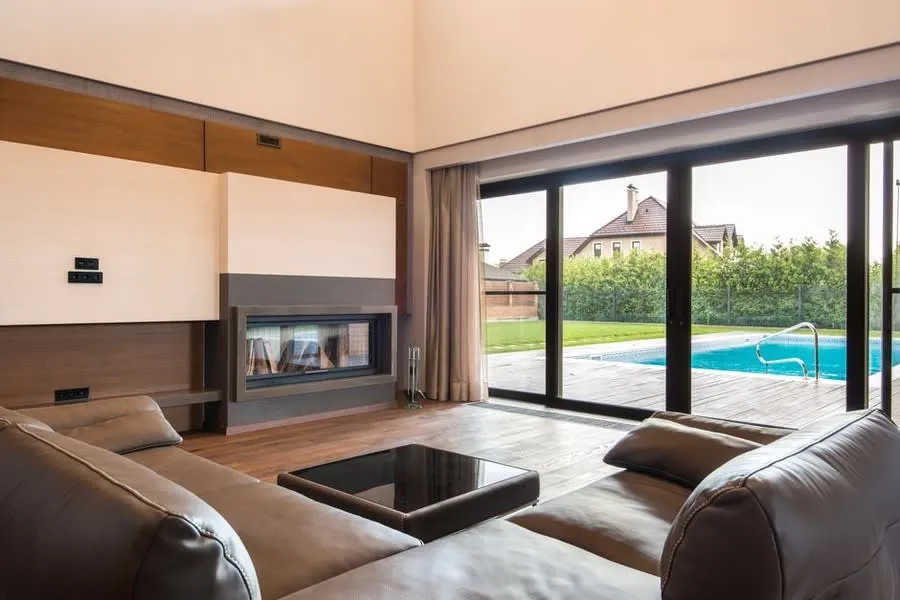
Most Exeter homeowners looking at their rear door know what they want: more glass, a better connection to the garden. The harder question is which door type actually suits the property. French doors and sliding patio doors look different, work differently, and the wrong choice for a specific situation isn’t just aesthetic - it affects how you use the room every day.
What Each Door Type Actually Is
French doors are two hinged panels that open outward from a central meeting point - occasionally inward, though that’s less common in UK installations. Both panels open fully, or you can use just one side. They’ve been on British homes since the 19th century and sit naturally on period properties.
Sliding patio doors have one or more panels that slide horizontally on a track. The standard setup has one fixed panel and one that slides; wider installations have two sliding panels that meet in the middle. Nothing swings outward into the garden, and the glass area is larger relative to the frame.
Bi-fold doors are a third option - covered separately in our bi-fold door cost guide - which fold back accordion-style for a wider clear opening. The choice between all three depends on the opening, the budget, and how the room connects to the garden.
Our door installation team fits all three types across Exeter. The French versus sliding question comes up the most, so it’s worth going through properly.
How They Compare On Price In Exeter
French doors are cheaper. A standard pair of uPVC French doors fitted in Exeter runs around £900-£1,600 depending on size, glazing, and hardware. Aluminium French doors start around £1,500 and go to £2,800 for a wider pair.
Sliding patio doors cost more for the same opening width. uPVC sliding doors start around £1,200-£2,000 fitted; aluminium sits between £2,000 and £4,000. The extra cost is the track and roller mechanism - it’s a more complex product to make and install than a pair of hinges.
The gap narrows at the top of the market. A well-specified aluminium French door and a well-specified aluminium sliding door are closer in price than their cheaper equivalents. If the budget is tight, uPVC French doors give you the most glazed area for the money. If you’re going aluminium either way, get quotes on both and let the site-specific factors decide.
One thing French doors need that sliding doors don’t: clearance to swing. If the patio has furniture, steps, or a raised threshold directly outside, they become awkward fast. Sliding doors need no clearance in front of the opening.
Which Lets In More Light
Sliding patio doors win on glass area for a given width. A closed pair of French doors has two full frames plus the central meeting stile cutting into the glass. On a 1.8m opening, the actual glazed area of French doors is noticeably smaller than an equivalent sliding door.
For Exeter’s older stock - Victorian and Edwardian terraces where rear ground-floor rooms can be genuinely dark - this matters. The difference in how a room feels is real, not marginal.
French doors can close the gap if you add sidelights - glazed panels on one or both sides of the frame. A pair with a sidelight on each side can match or beat a sliding door on total glass area. It adds cost, but it’s worth considering on a room that needs light.
When the door is open, French doors folded back against the wall briefly block the side glass as you pass through. A sliding door keeps the fixed panel clear at all times. Minor, but worth knowing.
Practicalities: Living With Each Type Day To Day
French doors open both panels when you want the full width. One panel works as an everyday door when you don’t. The downside is the swing - both panels need clearance to open either way, in or out. And in Devon’s south-westerly wind, a propped-open French door catches gusts in a way that’s more annoying than you’d expect. The panel either slams back or pushes further open than you want. It’s not a reason to rule them out, but it’s a daily reality on an exposed rear elevation that nobody mentions in the showroom.
Sliding doors stay in the track whatever the wind does. The trade-off is that you’re always opening from the same side, and you can only open half the total width - the sliding half. For most everyday use that’s fine. For moments when you want the full opening, it’s not.
Cleaning works differently too. French doors let you reach the outside glass by opening a panel and leaning out. The fixed panel on a sliding door usually needs cleaning from outside, which is an access consideration on some Exeter properties.
Which Suits Exeter’s Housing Stock
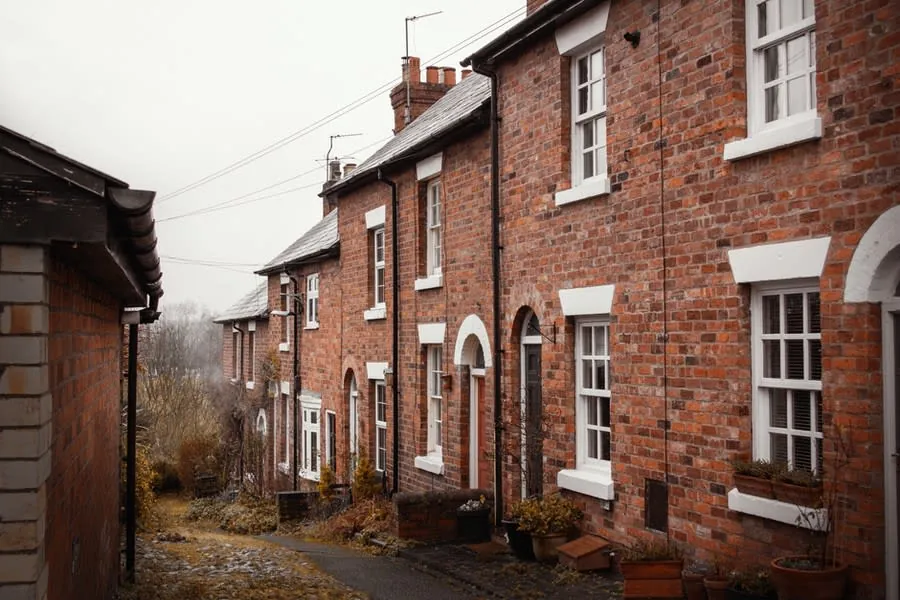
Victorian and Edwardian terraces in Heavitree, St Thomas, Pennsylvania, and St Leonard’s tend to suit French doors on the rear. The proportions sit naturally - French doors were standard on many Victorian rear elevations, and a timber or slim aluminium pair fits without looking incongruous. Planning rules are relaxed at the rear on most of these properties.
The 1930s and 1940s semis covering Pinhoe, Wonford, Whipton, and Countess Wear are often better suited to sliding patio doors. Wider rear openings, rectangular back rooms with a horizontal emphasis, and gardens that are typically level with the floor - it’s the natural fit. No steps to complicate the swing, and the wider glass area suits the room proportions.
Newer builds on Monkerton, Cranbrook, and the Alphington and Newcourt estates generally come with sliding patio doors already. Upgrading to aluminium is the common job on those properties.
Where there’s limited space immediately outside - a narrow patio, a raised deck, furniture that’s hard to shift - sliding doors are more practical regardless of property era.
Thermal Performance And Security
Both types are available with A-rated double glazing and thermally broken frames. At equivalent specification the thermal performance is similar. The practical difference is at the seals. French doors have a central meeting stile with its own seal to compress - over time that seal loses compression, and draughts come through the middle. Multi-point locking pulls the door tight and compresses the seals when locked, which helps. But it’s something to check on older French door installations.
Sliding doors have a different issue: the horizontal track seals at top and bottom of the sliding panel need to stay clean to work properly. A track full of debris compromises performance. More maintenance required there than on French doors.
Security on both is solid when specified correctly. Quality sliding doors have multi-point locking plus an anti-lift bar on the sliding panel - without the bar, a sliding panel can be lifted off its track from outside. French doors need multi-point locking and a solid hinge specification. Frame fixing into the surrounding wall matters as much as the lock on either type.
For a free quote and site visit on which door suits your Exeter property, contact our team.
Frequently Asked Questions
Are sliding patio doors or French doors cheaper in Exeter?
French doors are generally cheaper to supply and fit than sliding patio doors of the same quality and width. A standard pair of uPVC French doors fitted in Exeter typically costs £900-£1,600. Sliding patio doors in uPVC start at around £1,200-£2,000 for a similar width, rising to £2,500-£4,000 for aluminium. The cost gap narrows when you compare aluminium French doors against aluminium sliding patio doors - both sit in similar territory. The reason sliding doors cost more is the track, roller, and frame system, which is more complex than a simple pair of hinged doors.
Do sliding patio doors or French doors let in more light?
Sliding patio doors let in more light for a given opening width. The frame-to-glass ratio is lower on sliding doors because the outer frame is fixed and only the moving panel has a frame around it. French doors have two full door frames plus the central meeting stile when both panels are closed, which eats into the glass area. For a property where the garden is at the back and the room can feel dark, sliding patio doors are the better choice for light. For a room that already gets reasonable daylight, the difference is less significant.
Which is better for Exeter's weather - patio doors or French doors?
Both perform well when correctly fitted with good quality seals and drainage. The main practical difference is that French doors in Devon's prevailing south-westerly wind are more exposed when open - a gust can swing an open French door further than you want. Sliding patio doors stay in their track regardless of wind. For a property on an exposed elevation facing south-west, sliding doors are more convenient in practice. Both types should have multi-point locking and decent weatherstripping - these matter more for performance in Devon's wet winters than the door type itself.
Do French doors or patio doors need planning permission in Exeter?
Most installations of either type fall under permitted development rights and don't need planning permission, provided they're not materially larger than the existing opening. The exceptions are listed buildings, where consent is almost always required for any new or replacement door, and conservation areas - St Leonard's, Pennsylvania, the Cathedral and City Centre, and others - where the front or side elevation may need conservation area consent. Rear elevations in conservation areas are generally more straightforward. Check with Exeter City Council's planning team if your property is listed or in a conservation area before ordering.