
8 October 2026
Replacing Windows In Honiton And Ottery St Mary: Fire-Rebuilt Frontages, Cob Cottages And East Devon Consent
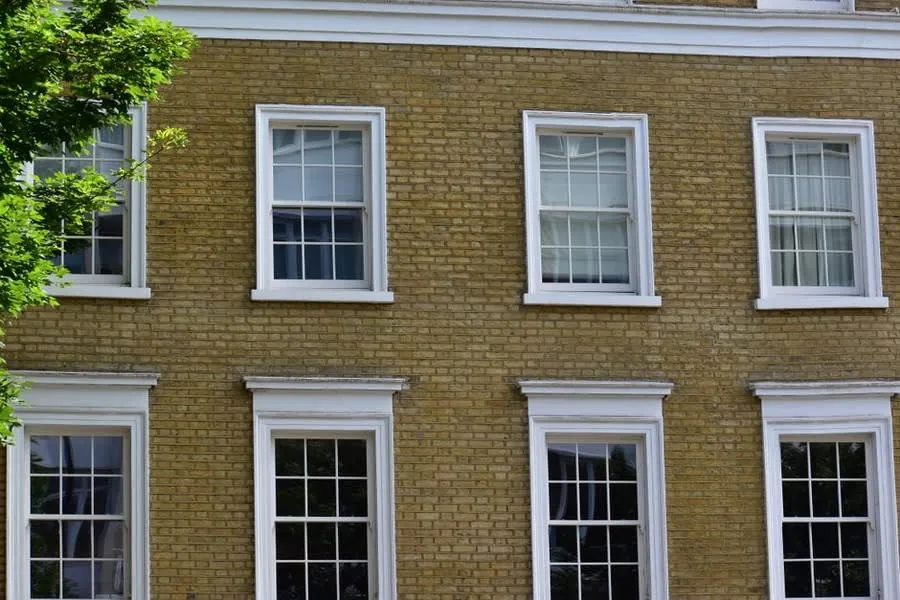
Ask a Honiton window fitter how old your house is and they will usually guess “Georgian” before you’ve finished giving the address. They’re right more often than not. Fire tore through the town in 1747 and again in 1765, when around 160 houses burned, and what was rebuilt along the High Street is almost all Georgian. Five miles down the Otter valley, Ottery St Mary lost about a hundred houses in a single afternoon on 25 May 1866, leaving roughly 500 people, a tenth of the town, homeless. Its conservation area still holds 48 listed buildings. Both towns also have plenty of ordinary housing, from 1960s semis to the 291 homes Baker Estates has been building off Hayne Lane on the edge of Honiton. Replacing windows in Honiton and Ottery St Mary is mostly simple. This guide covers the cases that aren’t, and what each kind of house costs.
Replacing Windows In Honiton Or Ottery? Date The House First
The council matters less than people think. Both towns are in East Devon District Council’s area, and for the bulk of houses East Devon never hears about a window swap at all. Your installer registers the job under a competent person scheme like FENSA and the council is notified automatically. Nobody visits and there’s no form to fill in.
What actually drives the price and the paperwork is when the house went up and what its walls are made of. We think of a house in these two towns as one of four types. There’s the Georgian brick frontage, very often flats over a shop. There’s the cob or rubble cottage, often thatched. Then the twentieth-century cavity-wall house, and finally the new build that still has its original builder’s windows. They get surveyed and priced quite differently. The window installation service we run in Honiton begins by working out which of the four you’ve got, and the rest of this post goes through them in that order.
Honiton High Street: Georgian Brick Over Shops
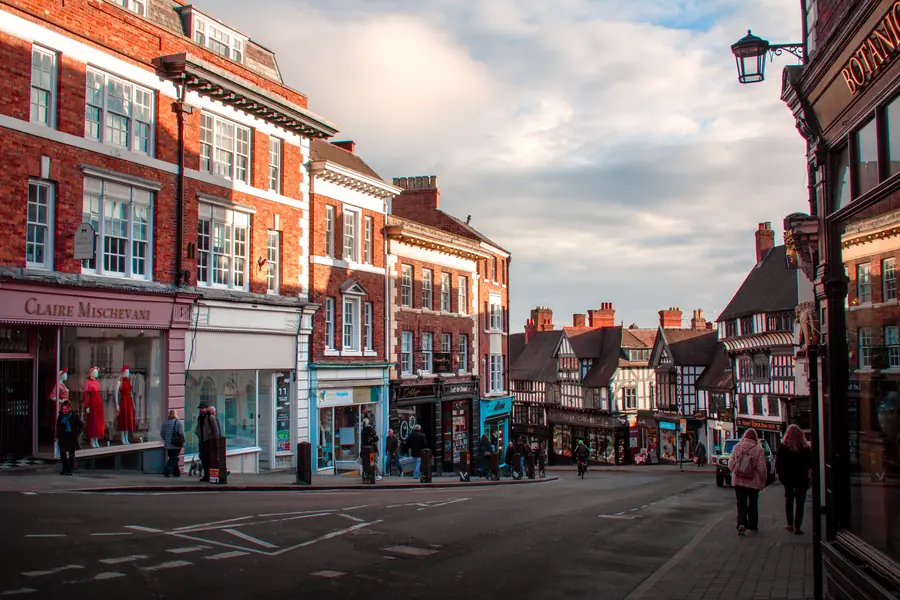
Honiton is basically one long, broad street, and the two fires rebuilt most of it. A few buildings survived, Marwood House of 1619 the best known among them, but most of what you see from the pavement went up in the decades after 1765: brick or rendered fronts, two or three storeys, sash windows lined up above the shopfronts. The conservation area, first designated in 1972, covers the High Street and the lanes and yards running off it.
The window question there usually isn’t about the house at all, because a lot of these buildings aren’t houses any more. Upper floors have been turned into flats, and flats don’t have permitted development rights for windows. If a new window on a flat would change how the building looks, it needs planning permission, conservation area or not. Swap a timber sliding sash for a uPVC casement on a first-floor flat above a High Street shop and that’s an application to East Devon, and we’d expect them to take a close interest in the result.
What about Article 4?
An Article 4 direction removes permitted development rights altogether, so in theory it can catch even a like-for-like swap on a house. We haven’t found one covering windows in Honiton’s conservation area, or in Ottery’s. East Devon hasn’t uploaded any Article 4 records to the national planning data service yet, so an empty search there doesn’t settle anything on its own. Before we price a job inside either boundary, we check with the council’s conservation team. The government’s technical guidance on householder permitted development rights sets out what a house can and can’t do without permission, and where Article 4 comes in.
Ottery St Mary: Medieval Lanes, Cob Walls And The 1866 Fire
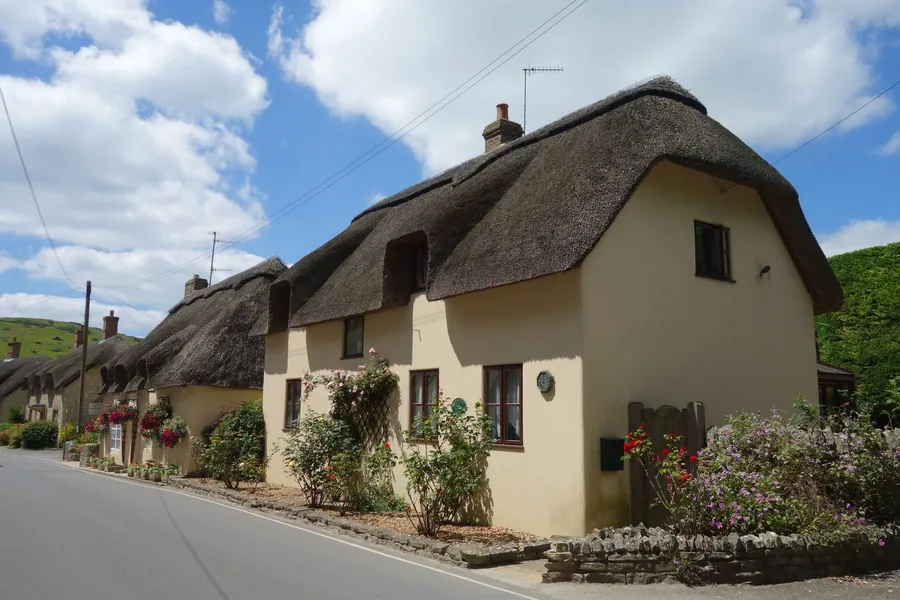
Ottery’s centre has a completely different layout. Rather than one broad street, it’s a tight knot of lanes whose names give away their age: Cornhill, Paternoster Row, The Flexton, Jesu Street, Yonder Street. The 1866 fire started in a cottage next to the charity school on Jesu Street and spread west across the thatched roofs as far as the silk factory on Mill Street. Walk that line now and you’ll see the buildings get noticeably younger. Outside it, and out in the lanes and farms around the town, you’re back among cob and thatch.
Cob changes the job more than any rule does. The walls are thick, the openings are seldom square, and the plaster or render around the frame has to breathe. Pack the gap with expanding foam and run cement mortar and silicone around a new frame, and you can trap moisture in a wall that has managed fine for two hundred years. On a cob cottage we expect to measure every opening more than once and to make good in lime afterwards, and that lime work, not the frame, is where most of the extra cost comes from. Frames are generally timber or flush casements rather than standard uPVC, partly for looks and partly because a heavy, deep frame can look wrong set in a soft, rounded reveal.
The Ottery St Mary conservation area dates from 1973, with a large extension added in 1983. Thatched cottages in and around the town are very often listed too, and listing moves the job into a different category entirely, which we come to below.
Hayne Lane, Higher Ridgeway And Littletown: The Easy Majority
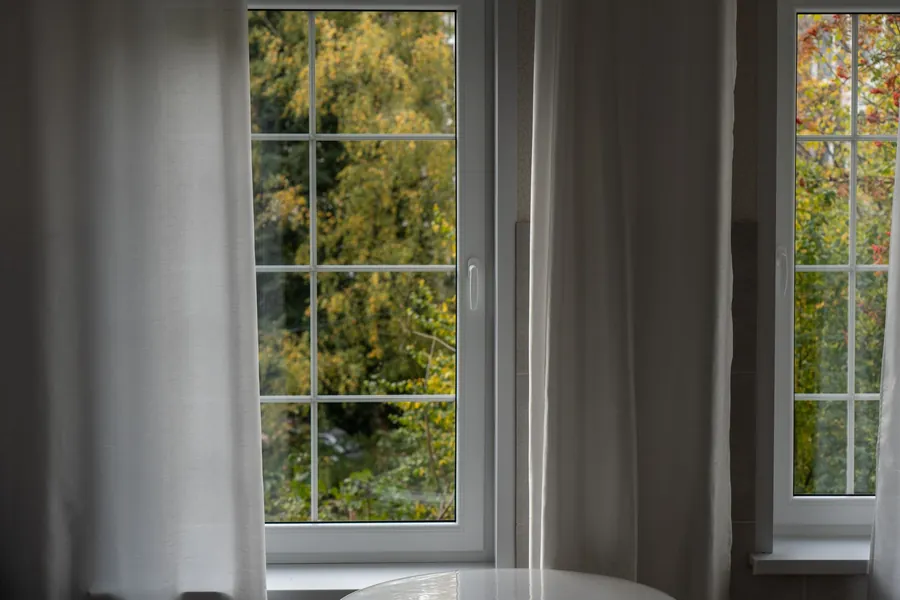
Away from the two old centres, most enquiries are about plain double glazing replacing plain double glazing. In Honiton that means the twentieth-century streets of Littletown and the estates spreading out from the town. In Ottery it means the roads off Butts Road, with more to come on the land at Higher Ridgeway that has outline permission for up to 130 homes. These houses have cavity walls and standard openings, they’re outside the conservation areas, and a straight swap is permitted development. Most semis take a day or two.
Brand-new homes are different. Nobody on Hayne Lane needs new windows yet, but owners there do ask us which warranty covers a misted unit. The builder’s warranty and the window manufacturer’s guarantee usually run for different lengths of time, and a blown sealed unit in year six can fall between them. Keep the window paperwork from your completion pack somewhere separate from the NHBC documents.
Most of the rest of the work on these streets is first-generation uPVC from the late 1980s and 1990s that has simply worn out: hinges that sag, handles that won’t lock, and grey mist between the panes. A-rated glass and warm-edge spacer bars barely change the price now. Triple glazing seldom earns its cost on a cavity-wall semi in a mild Devon winter.
Does The National Landscape Change Anything?
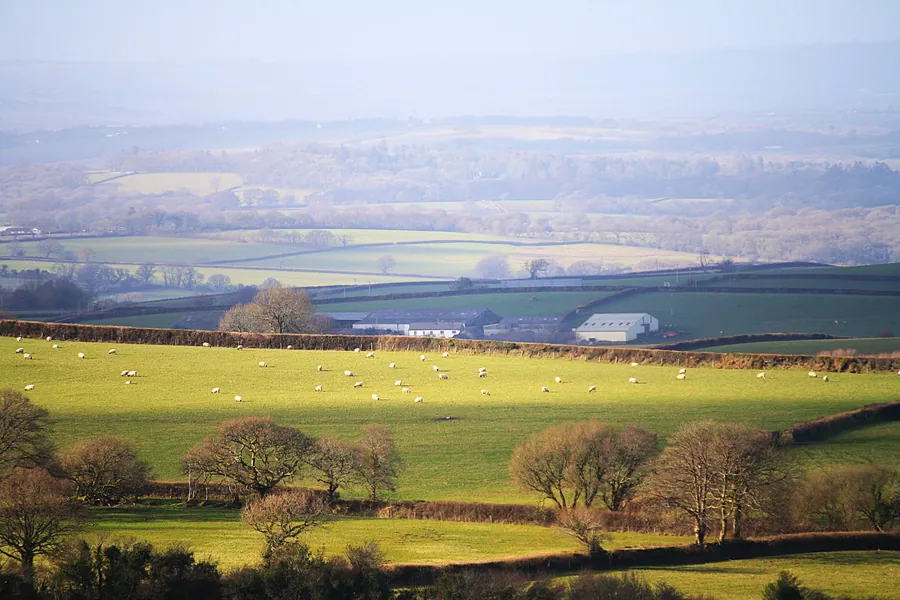
Honiton is hemmed in by protected countryside. The Blackdown Hills National Landscape runs down to the town from the north, and the East Devon National Landscape, designated in 1963 when these were still called Areas of Outstanding Natural Beauty, covers the hills and commons to the south and east. The East Devon National Landscape team are actually based in Ottery. The town centres lie outside the boundaries, but plenty of farmhouses and hamlets in the surrounding hills fall inside one or the other.
This one comes up on almost every farmhouse survey, and the answer is short. National Landscape land does lose some permitted development rights: you can’t clad the outside of a house, build a side extension or put up a two-storey rear extension without permission. Replacing windows isn’t on that list. A farmhouse inside the boundary can have its windows replaced on exactly the same terms as a semi in Littletown, unless it’s listed, in a conservation area, or has had its rights removed by a condition on an old planning consent. That last one is worth checking on barn conversions, which very often do.
Listed Buildings In Honiton And Ottery: Repair Before Replace
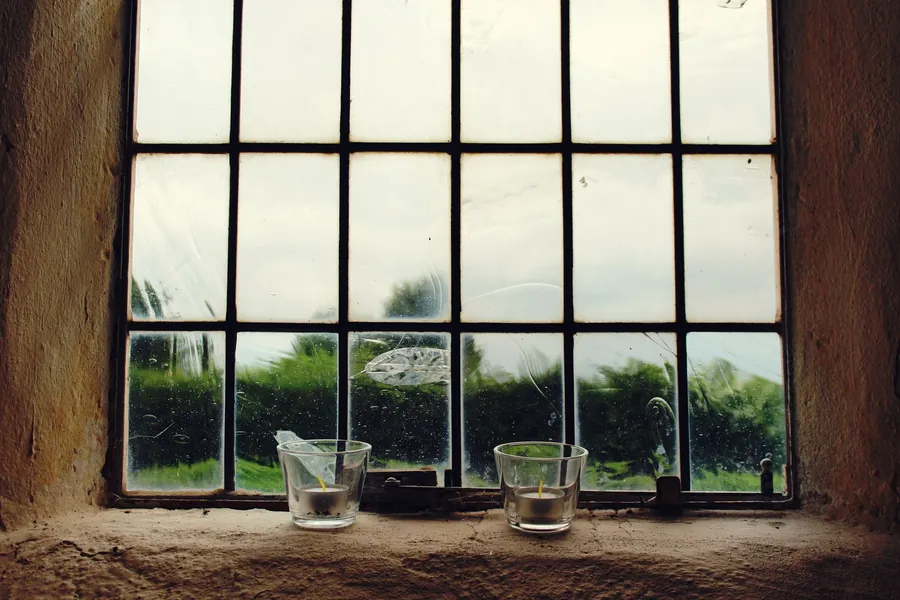
If a building is listed, any change to its windows that affects its character needs listed building consent from East Devon, inside and out, and doing the work without consent is a criminal offence rather than a planning breach. Putting double glazing into an original sash counts. So does replacing a rotten cottage casement with a modern one that looks almost the same. You can check whether your house is listed, and read what the listing says about it, on Historic England’s National Heritage List. It’s worth reading the description in full, since some entries mention the windows by name.
In practice, conservation officers would much rather see an original window repaired than replaced. On a listed High Street building in Honiton or a thatched cottage outside Ottery, the realistic options are usually these:
- Repair the existing frames: splice in new timber, re-cord the sashes, add draught strips. No consent needed for genuine like-for-like repair.
- Fit secondary glazing on the inside. It’s reversible and doesn’t touch the original, and it’s often the only way to get a listed house close to double-glazed comfort. Our secondary glazing service in Honiton covers what that looks like.
- Where a window really has gone, a careful timber copy, sometimes with slim double glazing, but only once consent has been granted.
We covered the coastal side of East Devon’s rules in our post on replacing windows in Exmouth and Budleigh Salterton. Inland nobody worries about salt. Here it’s the thatch and the listing.
Three Honiton And Ottery Houses, Three Window Bills

Price ranges don’t mean much until you put a house to them, so here are three typical ones from the jobs we quote in the two towns. These are our own figures, not a survey.
| House | What gets fitted | Typical cost |
|---|---|---|
| 1960s semi, Littletown, 9 windows | White uPVC casements, A-rated glass | £3,500 to £6,500 |
| First-floor flat over a High Street shop, 4 windows | Slim timber sashes, after planning permission | £5,200 to £8,800, plus access tower |
| Cob cottage near Ottery, 6 small openings | Timber or flush casements, lime making-good | roughly £4,500 to £7,500 |
The semi is the easy one: identical sizes repeat, ladders do the job, and FENSA covers the sign-off. The flat costs more because every sash is made separately and the frames are dearer, and because a first-floor window over a pavement often needs a tower rather than a ladder. On top of that comes the planning application, with a council fee and a wait of around eight weeks for a decision. The cottage frames are small, but each opening is a different shape, and the lime work runs to roughly £80 to £200 per window.
All three still need building regulations sign-off. A replacement window has to meet the thermal standard and mustn’t leave ventilation, safety glass or fire escape routes worse than before. With a registered installer, that’s a certificate in the post a few weeks after fitting. There’s no travel charge from Exeter to either town.
Book a free window survey in Honiton or Ottery St Mary and we’ll tell you which of the four houses you’ve got, what the council will need to see, and what it will cost.
Frequently Asked Questions
Who do I ask about replacing windows in Honiton or Ottery St Mary?
East Devon District Council, for both towns. Honiton and Ottery each have a town council, but town councils are only consulted on applications - they don't decide them. Conservation area questions, listed building consent and building control applications all go to East Devon. Exeter City Council has no role in either town, even though Ottery is barely ten miles from the city centre.
Is there an Article 4 direction on windows in Honiton or Ottery St Mary?
We haven't found one. Neither the Honiton conservation area (designated 1972) nor the Ottery St Mary one (designated 1973 and extended in 1983) appears to have a direction removing permitted development rights for windows. East Devon hasn't published any Article 4 records to the government's national planning data service yet, though, and an empty dataset is not proof there are none. Before we quote a conservation area job in either town, we check the position with the council's conservation team.
Does living in the East Devon National Landscape stop me fitting uPVC windows?
No. National Landscape status, which used to be called AONB, does remove some permitted development rights - cladding a house, side extensions and two-storey rear extensions. Replacing windows on a house is not one of them. A listed building, a conservation area where the new windows would look noticeably different, a flat, or an Article 4 direction can all bring planning into it, but the landscape designation on its own does not.
How much does it cost to replace windows in a Honiton or Ottery St Mary house?
From the jobs we quote, a white uPVC casement window fitted in either town is usually £400 to £750 depending on size, and a three-bedroom semi in somewhere like Littletown typically comes to £3,500 to £6,500 for eight to ten windows. A slim timber sash for a High Street flat in Honiton is more like £1,300 to £2,200 per window, and access above a shopfront can add a scaffold tower. On cob cottages around Ottery, budget for lime making-good around each opening as well, which is often £80 to £200 per window.