
4 October 2026
Replacing Windows In Crediton And Tiverton: Mid Devon Rules, Old Town Frontages And What It Costs
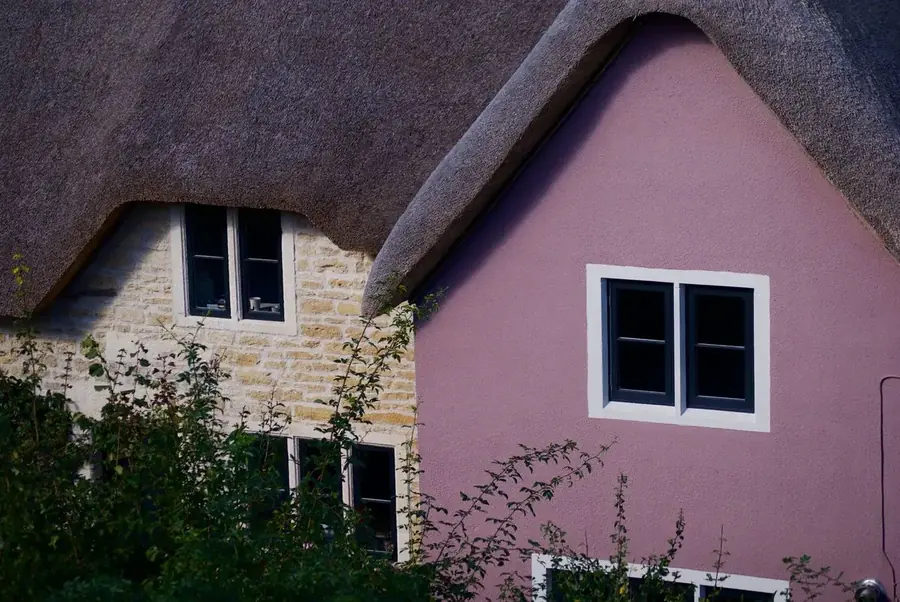
Most of the window enquiries we get from north of Exeter come from two towns: Crediton, eight miles up the A377 in the Creedy valley, and Tiverton, fourteen miles up the Exe on the A396. People tend to assume both are just outer Exeter. They are not. Both sit in Mid Devon, Tiverton is the biggest town in that district, and the council that decides what you can put in a conservation area window is Mid Devon District Council, based at Phoenix House in Tiverton. Crediton’s conservation area holds 232 listed buildings according to the council’s own appraisal. Tiverton’s conservation area is on Historic England’s Heritage at Risk register, rated “very bad”. Then there are the estates: postwar council housing at Moorhayes and Cowleymoor, 1970s and 80s cul-de-sacs at Westernlea, and Bellway’s 257-home Libbets Grange going up on the north-east edge of Crediton. This post goes through what each of those means for a replacement window, what it costs, and who signs the job off.
Crediton And Tiverton Answer To Mid Devon, Not Exeter
This sounds like admin. Mostly it is, but getting it wrong causes real problems. We have seen quotes for Crediton jobs that tell the homeowner to “check with Exeter City Council” about a listed building. Exeter has no say. For anything involving planning, listed building consent or a conservation area, the decision sits with Mid Devon’s planning team. Building control is a bit different again: since the two councils merged the service, it runs as North and Mid Devon Building Control, a joint team covering both districts.
For most houses none of this ever comes up. Swapping tired double glazing for new double glazing on a semi is permitted development, needs no planning application, and the building regulations side is handled by the installer. Our window installation service works the same way in Crediton and Tiverton as it does in the city: survey, written quote, made-to-measure frames, fitting, certificate. The council only becomes part of the conversation when the house is listed, sits in a conservation area and the new window would look different, or is a flat. Which, in the middle of both towns, happens more than you might expect.
Crediton’s Old Town: Fires, Cob Cottages And Georgian Rebuilding

Crediton burned badly in the eighteenth century. The worst fire was in 1743, with more in 1766, 1769 and 1772, and between them they destroyed hundreds of houses. That is why the High Street today is mostly three-storey Georgian frontages, often rendered or brick, many with nineteenth-century shopfronts at street level and sash windows above. The older town survives mainly in pockets. Dean Street still has buildings that pre-date the fires, including an early sixteenth-century stone house at number 29 and two cob-and-thatch cottages. Around the Church of the Holy Cross, old cob walls are part of what the council protects.
For windows, that gives you three quite different jobs inside one small conservation area. The upper floors of the High Street are the sash question: like-for-like sliding sashes go through without fuss, while a uPVC casement with a different opening pattern risks becoming a planning matter. Many of those buildings are also flats over shops, and flats have no permitted development rights for windows at all. The council’s appraisal says plainly that unsympathetic uPVC replacements on shops and flats are one of the things wearing down the town centre. Then there are the cob and rubble stone cottages, where the wall matters more than the frame. We have written separately about replacing windows in cob and solid-wall houses, covering lime pointing, deep reveals and why sealing a cob wall with cement and silicone causes damp, so we will not repeat it here. The short version for Crediton is that you should expect a survey that measures each opening several times and asks what the wall is made of before it asks what colour frame you want.
Tiverton’s Town Houses And The Heathcoat Terraces
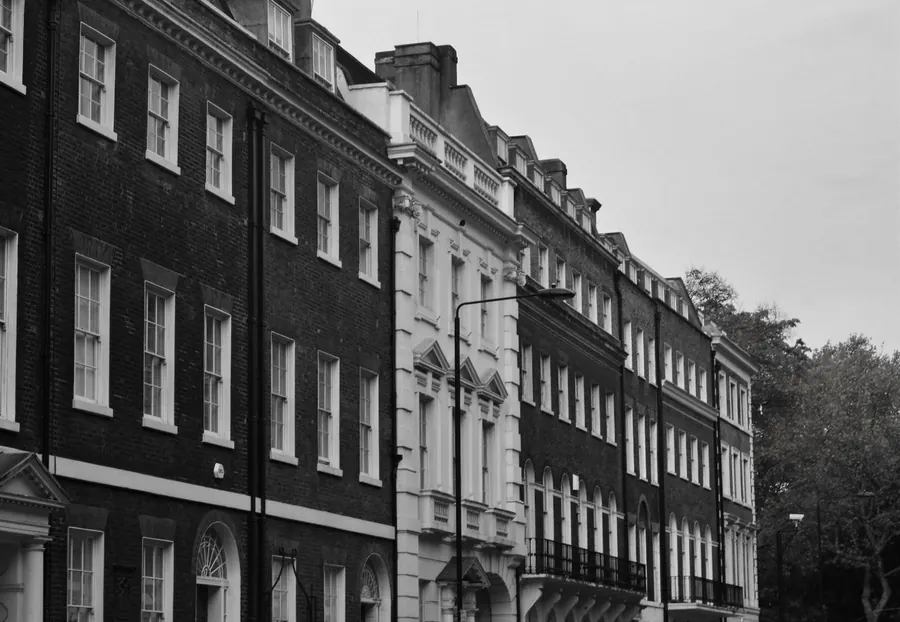
Tiverton’s conservation area is big. It runs along both banks of the Exe, takes in the castle, St Peter’s Church built from local purple stone, and the streets around Fore Street, St Peter Street and Bampton Street, and stretches out to the west side of the river around Heathcoat’s lace factory. Repeated fires cleared most of the town’s early buildings, so the stock you are dealing with is largely Georgian and Victorian, with some unusually fine examples mixed in.
The part people outside the town tend to miss is West Exe. When John Heathcoat moved his lace business to Tiverton in 1816, he built planned terraces for his workers around the factory and St Paul’s Square. Mid Devon’s appraisal describes them as plain Georgian designs with distinctive cast-iron window sills, and rates the housing as a nationally significant survival of planned industrial housing. If you own one, those cast-iron sills are worth keeping. A good installer can fit a new frame above an original sill rather than ripping it out and replacing it with a uPVC one, and on these terraces that detail matters more to the conservation officer than whether the frame is timber.
The other recurring Tiverton job is the large town house that was split into flats decades ago. St Peter Street has several. Flats need planning permission for any window change that alters the appearance of the building, conservation area or not, and the council’s appraisal specifically names unauthorised window replacements in flats as a problem. If you are buying one of these, ask the seller for the planning history of the windows as well as the certificate.
Conservation Areas And The Article 4 Question
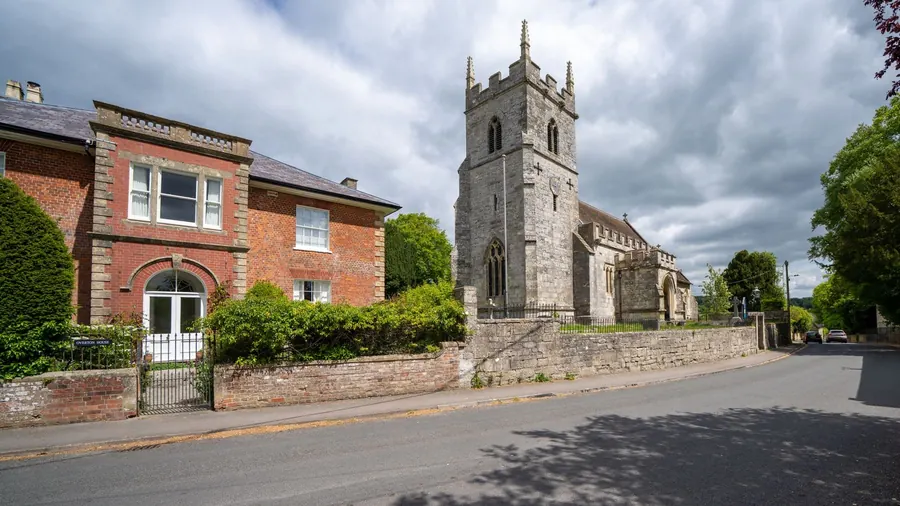
Living in a conservation area does not, by itself, stop you replacing windows on a house. What it does is make the appearance of the new window something the council can take an interest in. Like-for-like is the safe route. Change the material, the way it opens, the frame depth or the glazing bars, and you may have crossed into needing permission. Mid Devon keeps the boundaries and appraisals for every one of its conservation areas in Mid Devon on its website, which is the quickest way to check whether your street is in or out. Tiverton has three that touch the town: the main Tiverton area, the Grand Western Canal and Blundell’s.
Article 4 directions are the stronger tool. They remove permitted development rights altogether, so even a like-for-like swap needs an application. Mid Devon has one that covers windows on houses, and it is in Cullompton, not in either of our two towns. Crediton’s appraisal looked at the option and decided that so many traditional windows had already gone to uPVC and aluminium that a direction would generally not be viable. Tiverton’s appraisal recommended considering one; as far as we can find, none has been made. That position can change, and we check it on every conservation area job before we quote.
What the council does publish is guidance on what it considers a good replacement. Its Mid Devon design guidance on windows and doors is short and practical, and worth reading before you choose a style if your house is inside a boundary. Listed buildings are separate again. Any change to a listed building’s windows, inside or out, needs listed building consent, and that includes swapping single glazing for double in an original frame.
The Estates: Moorhayes, Cowleymoor, Westernlea And The New Builds
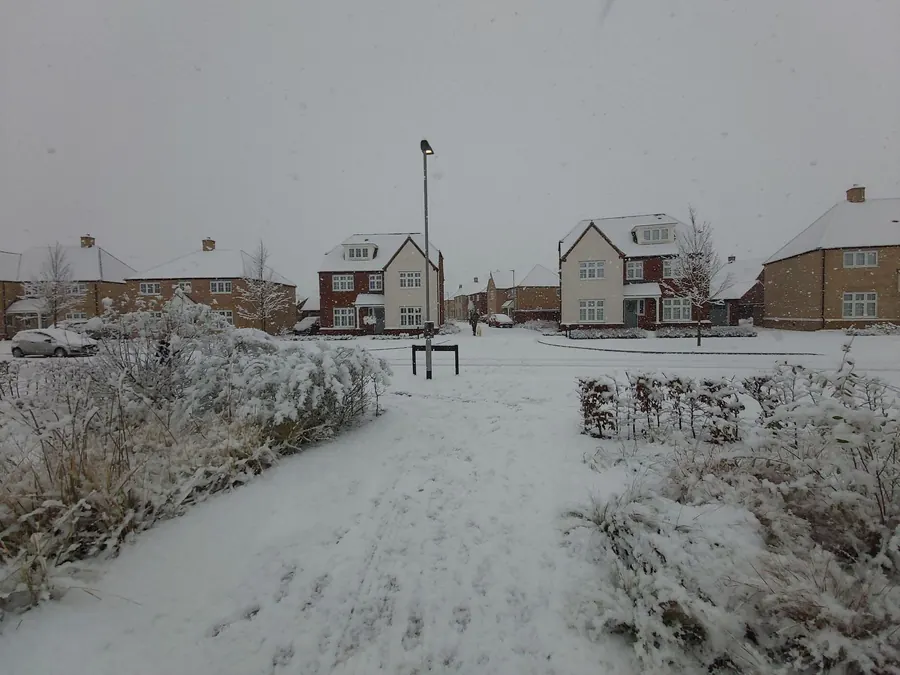
Away from the old centres, most of the work in both towns is simple. Tiverton’s postwar estates at Moorhayes and Cowleymoor were mostly built with steel or timber frames that were replaced once already, often in the 1990s, and those first-generation uPVC units are now failing in the usual ways: blown seals, stiff hinges, handles that no longer lock. In Crediton the equivalent is the housing around Westernlea and Wellparks on the western and southern edges. None of these streets are in a conservation area, the walls have cavities, and a replacement is a day or two per house with no council involvement.
The question we hear on these jobs is not about planning, it is about whether to bother with anything better than the cheapest white casement. It depends how long you are staying. A-rated glass and a warm-edge spacer bar are standard now and cost little extra. Triple glazing rarely pays for itself on an estate semi in a Devon winter. Coloured frames add roughly a fifth. For the brand-new homes at Libbets Grange and Tiverton’s eastern extension, there is nothing to replace yet, but builders’ warranties and window guarantees run on different clocks, and it is worth knowing which one covers a misted unit five years in.
What Replacing Windows Costs In Crediton And Tiverton
These are our own guide figures, based on the jobs we quote in the two towns rather than any national survey:
- A standard white uPVC casement: £400 to £750 per window fitted, depending on size.
- A three-bedroom semi with 8 to 10 windows: usually £3,500 to £6,500 all in.
- uPVC sliding sashes: around £700 to £1,200 each.
- Slim timber or timber-alternative sashes for a conservation frontage: typically £1,300 to £2,200 each.
- Making good a cob or rubble stone reveal in lime: often £80 to £200 extra per opening. That is labour, not a dearer frame.
Two things push Crediton and Tiverton prices around more than anything else. The first is access: a third-floor sash above a High Street shop may need scaffold or a tower rather than ladders, and that is a line on the quote. The second is the number of different window sizes. A 1960s semi often has four or five repeated sizes. A Georgian town house in Tiverton may have nine windows and nine sizes, each one made separately. Unlike the seafront jobs we described in our post on replacing windows in Exmouth and Budleigh Salterton, there is no coastal hardware uplift inland. A stainless friction stay is still a nice upgrade, but a sheltered house in the Exe valley does not need it the way a seafront terrace does. We do not add a travel charge for either town.
Building Regulations Sign-Off In Mid Devon

Every replacement window in England counts as building work, and Crediton and Tiverton are no different. The new unit has to meet the thermal standard in Approved Document L on conservation of fuel and power, which for a replacement window in an existing home means a U-value of 1.4 W/m²K or a Window Energy Rating of band B. It also must not leave the house worse off than before on background ventilation, safety glass in risky locations or escape windows from upstairs bedrooms.
In practice the paperwork route depends on your installer. If they are registered with a competent person scheme such as FENSA or Certass, they certify the work themselves, notify Mid Devon, and you receive a certificate a few weeks later. Keep it with the deeds. If they are not registered, an application has to go to North and Mid Devon Building Control before the job starts, with a fee and an inspection. Skipping both is how people end up with a regularisation application when they come to sell, and in a conservation area that can also flush out a planning question nobody wanted asked.
On listed buildings the order of events matters. Listed building consent comes first, then the building regulations side, and a window approved under one regime still has to satisfy the other. For older and listed properties there is some flexibility on the thermal standard, because forcing a modern sealed unit into a historic opening can do more harm than good, and that is a conversation to have with the council early rather than after the frames are ordered.
Book a free window survey in Crediton or Tiverton and we will tell you which council rules apply to your house, what the job will really cost, and how it gets signed off.
Frequently Asked Questions
Which council deals with replacing windows in Crediton and Tiverton?
Mid Devon District Council, for both towns. Crediton is only eight miles from the centre of Exeter, but it is not in the city and Exeter City Council has no planning role there. Mid Devon is the planning authority for conservation area and listed building questions, and building control is run as a joint service with North Devon Council under the name North and Mid Devon Building Control. If your installer is registered with a competent person scheme such as FENSA, you never need to deal with building control yourself, because the installer self-certifies the work and the council is notified.
Is there an Article 4 direction on windows in Crediton or Tiverton?
Not at the time of writing. The only Article 4 direction Mid Devon publishes that removes permitted development rights for windows on houses covers the Cullompton conservation area, and it came into force in December 2015. The council's own appraisal of the Crediton conservation area considered the idea and concluded that so many uPVC and aluminium windows were already in place that a direction would generally not be viable. Tiverton's appraisal suggested one should be considered, but none has been made. These things can change, so we check the council's current position before quoting any conservation area job in either town.
How much does it cost to replace windows in a Crediton or Tiverton house?
Based on the jobs we quote, a standard white uPVC casement window fitted in either town usually costs between £400 and £750 depending on size, and a three-bedroom semi with eight to ten windows tends to come in between £3,500 and £6,500. Sliding sash windows cost more: roughly £700 to £1,200 each in uPVC and £1,300 to £2,200 for slim timber or a timber-alternative sash on a conservation area frontage. Deep cob or rubble stone openings rarely change the frame price much, but making good with lime rather than cement adds labour. There is no travel charge to either town from our Exeter base.
Do replacement windows in Mid Devon need building regulations approval?
Yes. Replacing a whole window, including the frame, is building work under the regulations, wherever in England you live. The new window has to meet the thermal standard in Approved Document L, which for a replacement window in an existing home is a U-value of 1.4 W/m²K or Window Energy Rating band B, and it must not make ventilation, safety glazing or fire escape provision worse than before. A FENSA or Certass registered installer handles that through self-certification and you receive a certificate afterwards. Without one, an application has to go to North and Mid Devon Building Control before the work starts.