
12 October 2026
Replacing Windows On The Dartmoor Edge: Chagford, Moretonhampstead And Okehampton
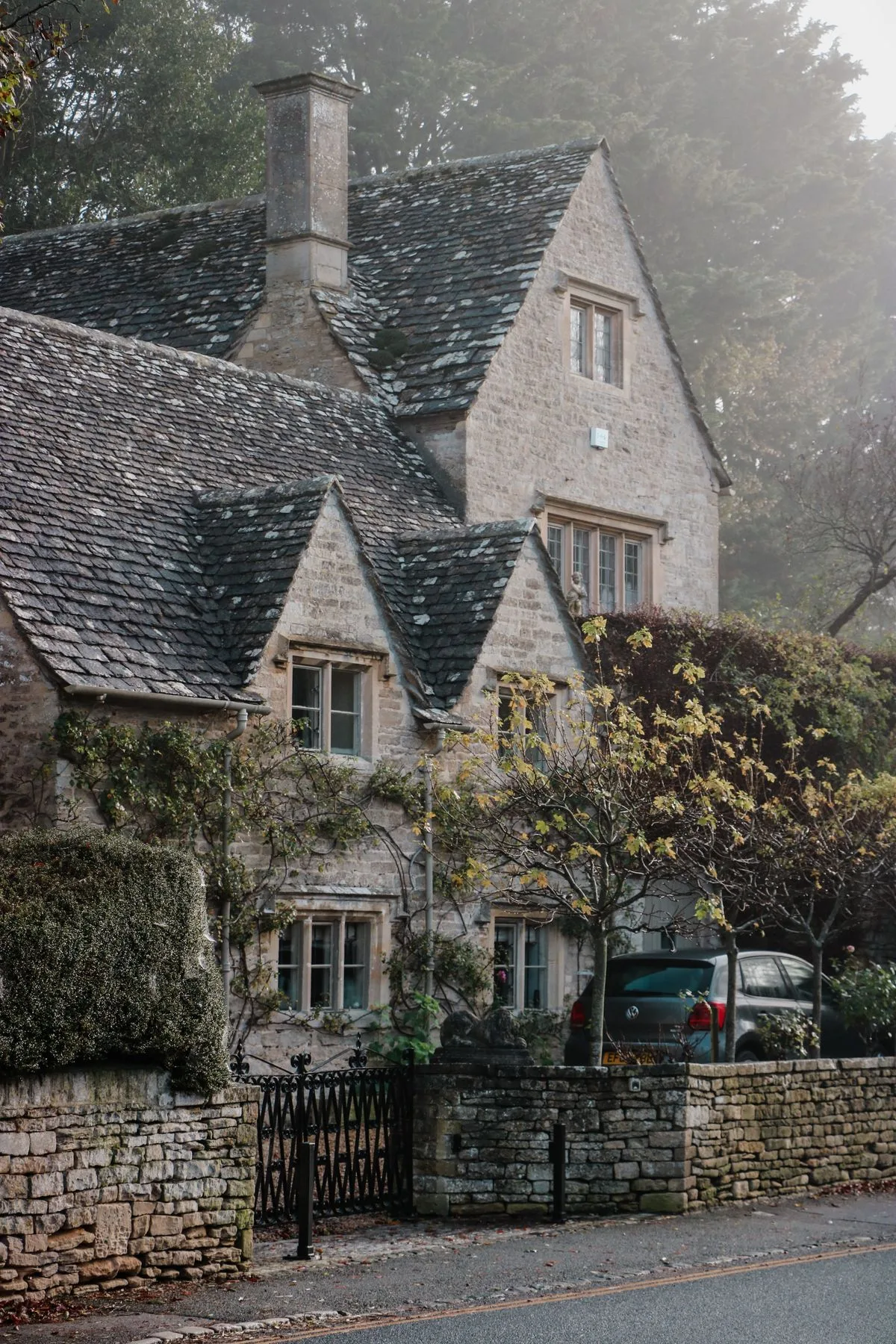
Drive the A382 between Moretonhampstead and Chagford in October and you’ll see the same thing on every wall that faces the moor: water running off granite. That weather, and the stone it lands on, is what decides a window up here. Replacing windows in Chagford, Moretonhampstead or Okehampton also means dealing with two different planning authorities. The National Park boundary runs between the towns, so the same window can need permission on one side and nothing at all on the other. Chagford’s conservation area alone has 53 listed buildings. Moretonhampstead’s has 70. The Park as a whole has 2,861. Okehampton is outside the Park and answers to West Devon instead. This guide covers who decides, what the Park’s own appraisals expect, how to spec a window for 200 metres up, and what the work costs.
Replacing Windows On The Dartmoor Edge: Two Councils, Three Towns
Start with the map. Chagford and Moretonhampstead are both inside Dartmoor National Park, which makes Dartmoor National Park Authority their planning authority. Teignbridge and West Devon don’t get a say on planning there. Okehampton town lies just north of the Park boundary, so West Devon Borough Council deals with it. The parish wrapped around the town, Okehampton Hamlets, runs up into the Park, so a farmhouse with an Okehampton postcode can still be a Park Authority matter.
For most houses none of that comes up. Replacing windows on a house that still has its permitted development rights doesn’t need planning permission, as long as the new windows look broadly like the old ones. Living in a National Park doesn’t change that. The Planning Portal’s guide to doors and windows sets out the general rules. A FENSA or Certass registered installer handles building regulations and you get a certificate afterwards. Our window installation service covers all three towns from Exeter the same way it covers the city.
The authority starts to matter on listed buildings, on flats, and on houses in a conservation area where the new window would look noticeably different. In the old centres of Chagford and Moretonhampstead, that’s a lot of houses.
Chagford: A Stannary Town Of Granite, Render And Sashes
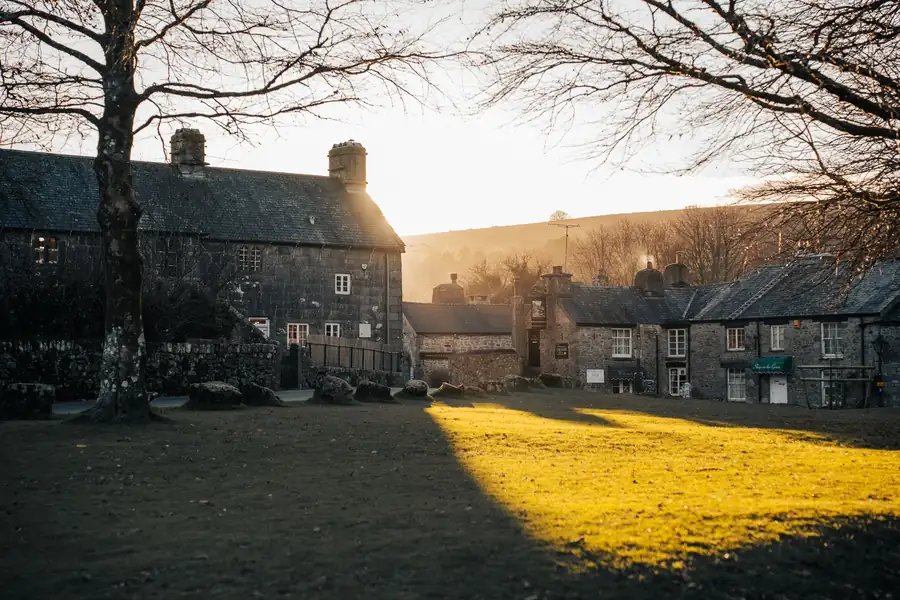
In 1305 the Crown picked Chagford as one of Dartmoor’s three Stannary towns, where tin was weighed, stamped and taxed. The money left behind a centre full of granite, though most of it is now hidden under render. Its conservation area was first designated in March 1973. The boundary was adjusted in 1993 and extended again in April 2021 to take in Rack Park and the old fields west of New Street.
The Park Authority’s character appraisal is worth reading before you get a quote, because it says plainly what the Authority considers right for a window there. Original windows in the town’s historic buildings are timber, painted rather than stained, and split into small panes by slender wooden glazing bars. Plastic or aluminium frames, including ones with fake glazing bars stuck inside the glass, are named as things that “erode their original character”. You won’t get a much clearer hint.
The streets don’t all want the same window. Mill Street has the smart early nineteenth century houses, Millbrook, Claremont and Belmont among them, with tall multi-paned sashes set symmetrically in smooth render. Get the pane pattern or the meeting rails wrong on one of those and it shows from across the road.
Lower Street is more rural. Casements are more common there, the Bishop’s House keeps its mullions, and flush-fitting timber casements look right where a sash wouldn’t. New Street is the odd one out: late medieval houses that had sashes put in later so they’d look like town houses. Number 6 still has its flush-framed, multi-paned casements, and the appraisal calls that kind of survival rare.
If your house is one of the 53 listed buildings in the conservation area, any change to the windows needs listed building consent from the Park Authority, including a “like-for-like” swap to double glazing. Check the entry on Historic England’s National Heritage List before anyone measures up.
Moretonhampstead: Fire, Thatch And The 1845 Rebuild
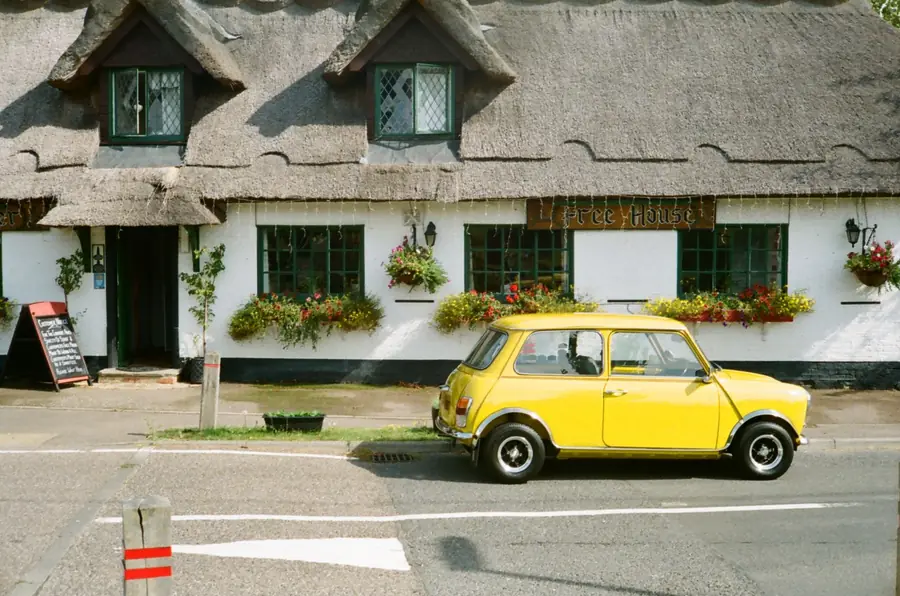
Moretonhampstead burned, more than once. The worst fire was in 1845, when about forty buildings on Cross Street and Fore Street were lost and around fifty families were left with nothing. Another in 1926 took out part of The Square. Thatch spread the flames from roof to roof. That’s why the town looks more Georgian and Victorian than its medieval street plan would suggest, and why only about ten thatched roofs are left.
For windows, this means most of the centre is rendered, often lined out to look like cut stone, with sash windows. Numbers 10 to 18 Fore Street are a good example. They were built to replace houses lost in 1845, they’re listed, and the appraisal describes them as “largely unaltered”, multi-paned sashes included. Pitt House on Ford Street shows that even the grand houses changed over time. Its sashes went from twelve or sixteen panes down to four in the late nineteenth century. Before we suggest a glazing pattern, we look at which period your house actually belongs to.
The conservation area was designated in June 1973 and has 70 listed buildings, two of them Grade I: the church and the granite Almshouses on Cross Street. We haven’t found an Article 4 direction covering windows in either Moretonhampstead or Chagford. Permitted development rights still apply on unlisted houses, but the Park Authority still decides whether a new window looks materially different. We ask before quoting rather than after.
Okehampton: Outside The Park, Inside West Devon
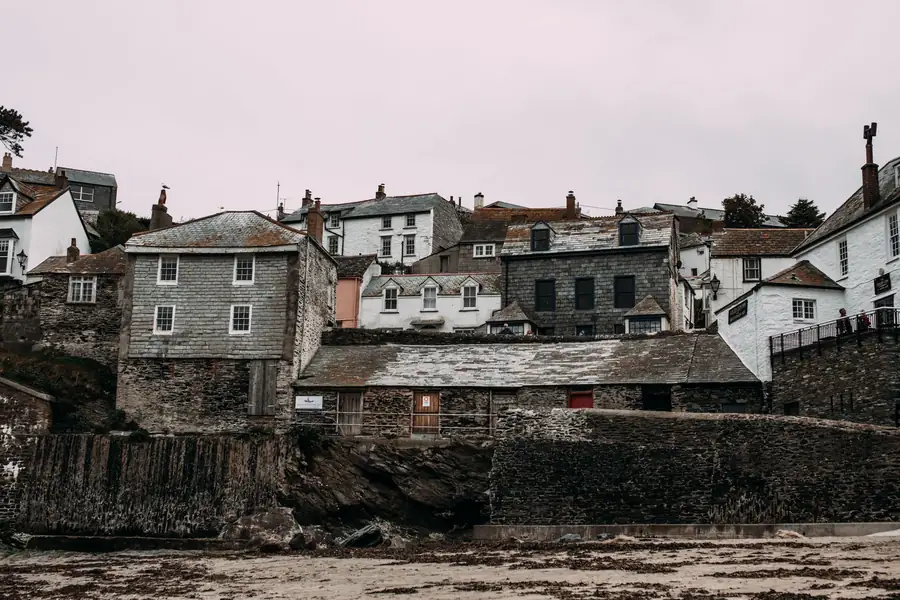
Okehampton is the biggest of the three towns and the easiest to deal with. It’s outside the Park, so West Devon Borough Council is the authority, and much of its housing is post-war or newer, on estates around the edges of the town. On those houses, replacing uPVC with new uPVC is a normal permitted development job and nobody at the council needs to hear about it.
The exception is the conservation area, which comes in two separate pieces. One surrounds the parish church on the hill west of the centre. The other covers the middle of town and runs south along Station Road and Castle Road. The council’s first full appraisal of it was drafted and put out for consultation in 2024. We haven’t found an Article 4 direction covering windows there either. A house in either part keeps its permitted development rights unless it’s listed or a flat, but the same test applies: if the new window would change how the house looks, ask West Devon first.
Granite is the common building stone, as it is up the hill, so deep reveals and uneven openings show up in the older buildings around Fore Street just as they do in Chagford.
Wind-Driven Rain At 200 Metres: Specifying For The Moor
Moretonhampstead sits at roughly 200 metres above sea level, and Chagford at about 180. Okehampton is lower, but it sits right under the northern edge of the high moor and gets the weather that rolls off it. Weather that would be a shower in Exeter arrives sideways up here, and it finds every weak joint around a window. Most of the failures we see on the Dartmoor edge aren’t the glass or the frame. They’re the joint between the frame and the wall.
What we specify differently
Windows are tested for watertightness under BS EN 12208, and the class tells you how much wind pressure a window keeps water out at. For an exposed gable we ask the manufacturer for a high class, not the bare minimum, and we write the class on your quote so you can see it.
Then there’s the outside of the frame. Wider sill projections and a proper drip let water clear the wall instead of creeping back underneath. Old walls round here are rubble granite, or cob behind render, and both need to breathe, so we seal with lime-compatible materials rather than hard cement and leave out the expanding foam that holds water against the stone. Our guide to replacing windows in cob and solid walls goes into the cob side in more detail.
Hardware is the last bit. Plated steel friction stays rust quickly in a damp moorland winter, so we fit stainless.
None of this adds much per window. Leave it out and you can end up with a wet reveal on a two-year-old window.
Timber, Flush Casement Or uPVC: What You’ll Actually Get Approved
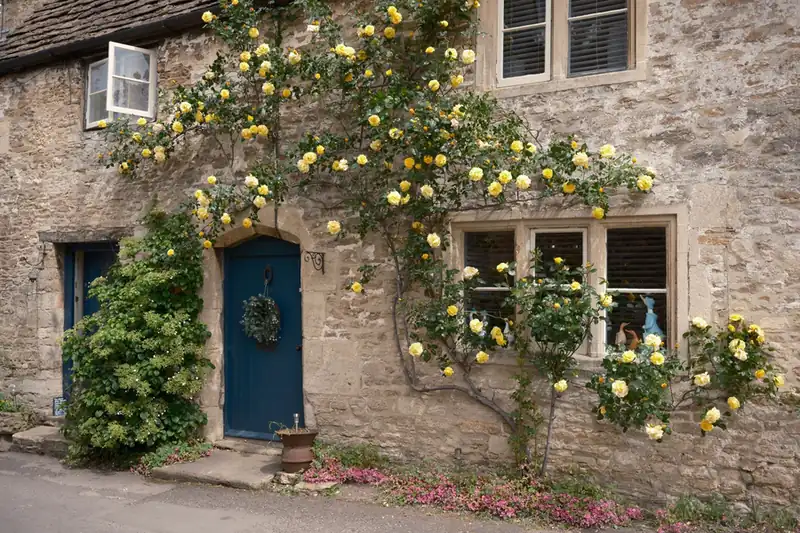
It’s easier to think about this house by house than town by town.
Listed buildings in any of the three towns
Repair first. A joiner can splice new timber into rotten sills and bottom rails for far less than a new window, and you keep the old glass. Where that won’t work, a consented timber replacement matching the original pattern is the route, sometimes with slim double glazing if the authority agrees. Secondary glazing on the inside is reversible and usually the quickest way to a warmer room.
Unlisted houses in the Chagford and Moretonhampstead conservation areas
Painted timber is the safe choice: sliding sashes on the rendered town houses, flush casements on the cottage-style ones. If the house already has uPVC, replacing it with better uPVC usually raises no objection. Swapping original timber for uPVC is where the Park Authority’s appraisal works against you.
Okehampton estates and newer houses anywhere
No restriction on material. White or coloured uPVC casements are what most people choose, and flush-sash uPVC looks neater on the older rendered cottages scattered between them.
If you’re comparing towns, our recent guide to replacing windows in Topsham shows how a different authority handles a similar mix of listed and ordinary houses, and why the answer depends on who holds the pen.
What Window Replacement Costs Around Chagford, Moretonhampstead And Okehampton
These ranges come from jobs we’ve priced in and around the three towns. They’re our own figures, not a survey, and the exact number depends on access and the condition of the openings.
| House | Usual job | Typical price |
|---|---|---|
| 1990s semi in Okehampton, 9 windows | White or anthracite uPVC casements | £3,600 to £6,200 |
| Rendered town house in Moretonhampstead, 5 windows | Painted timber sliding sashes | £6,500 to £11,000 |
| Granite cottage near Chagford, 7 windows | Timber flush casements, lime making good | £6,000 to £10,500 |
| Listed house in either Park town | Repairs plus internal secondary glazing | roughly £2,500 to £6,000, plus consent time |
Each window, roughly: uPVC casement £480 to £780 fitted, timber flush casement £900 to £1,500, timber sash £1,400 to £2,300, secondary glazing £320 to £620. Deep granite reveals add labour rather than materials, usually half a day more on a cottage. A farmhouse down a single-track lane may need the frames brought in by hand or on a smaller van, and we price that at the survey.
There’s no travel charge to any of the three towns. Moretonhampstead is about 14 miles from Exeter by road and Okehampton a little over 20, straight up the A30. Listed building consent has no fee but takes around eight weeks, and so does a planning application, so start the paperwork in spring if you want the windows in before the weather turns.
Book a free window survey on the Dartmoor edge and we’ll tell you which authority covers your address, what it’s likely to accept, and what the job will cost in writing.
Frequently Asked Questions
Who handles planning for replacement windows in Chagford and Moretonhampstead?
Dartmoor National Park Authority. Both towns are inside the National Park, so the Park Authority is the local planning authority, not Teignbridge or West Devon. It decides conservation area and listed building questions for windows in either town. Chagford's conservation area dates from March 1973 and Moretonhampstead's from June 1973, and the Authority publishes a character appraisal for each one.
Is Okehampton in Dartmoor National Park for planning purposes?
The town itself is not. Okehampton sits just north of the Park boundary, so West Devon Borough Council decides planning questions there, including anything in the town's two-part conservation area around the parish church and the centre. Some outlying homes in Okehampton Hamlets parish are inside the Park, though, and those go to Dartmoor National Park Authority. We check which side of the line your address falls on before quoting.
Can I put uPVC windows in a house in Chagford or Moretonhampstead?
Outside the conservation areas, usually yes, provided the house still has its permitted development rights and the new windows look broadly like the old ones. Inside the conservation areas it depends on the house. The Park Authority's appraisals say original windows there are painted timber with slender glazing bars, and that plastic or aluminium frames erode that character. On a listed building, expect the Authority to want timber. On an unlisted house that already has uPVC, a like-for-like swap is often straightforward.
Do windows on Dartmoor need a different specification because of the weather?
They benefit from one. Chagford sits at about 180 metres and Moretonhampstead at about 200, and west-facing walls up there take far more wind-driven rain than a house in Exeter. We ask manufacturers for a high watertightness class under BS EN 12208, fit wider drip details on sills, seal deep granite reveals with lime-compatible materials, and use stainless steel friction stays and fixings.