
12 September 2026
Window Glass Options In Exeter: Toughened, Laminated, Obscure, Low-E And Solar Control
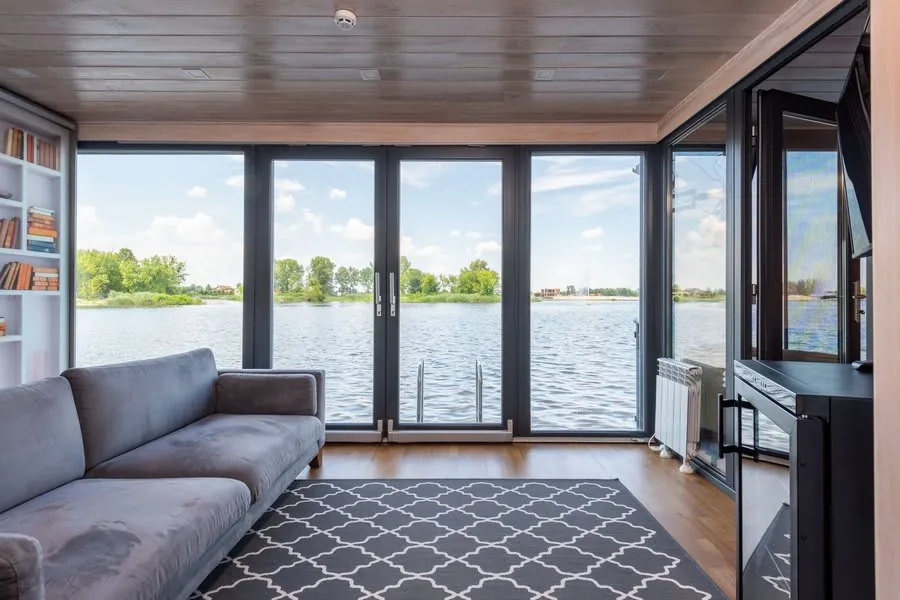
Two window quotes for the same Exeter house can land £2,000 apart with near-identical frames. Most of the time the difference is not the frame at all - it is the glass. The sealed unit is roughly 70% of the surface area of a window and a large share of what it costs, yet it is the part of a quote homeowners skim past, because “28mm double glazed unit” reads like a detail rather than a decision. It is a decision, and there are six or seven of them stacked inside that one line. This is a guide to what each of those choices actually does, which ones Building Regulations take out of your hands, and how to read a glazing spec well enough to compare two prices fairly.
Annealed, Toughened And Laminated: Three Different Glasses
Ordinary window glass is annealed float glass. It is cooled slowly during manufacture, it can be cut and drilled on site, and when it breaks it breaks into long curved shards. That is fine at first floor level and it is what sits in most of the windows in a typical Exeter semi.
Toughened glass is the same material reheated to around 620°C and quenched, which locks the surface into compression. It ends up four to five times stronger in impact, and when it does fail it disintegrates into small blunt granules rather than blades. The trade-off is that it cannot be cut, drilled or edge-worked afterwards. Every dimension has to be right before it goes in the furnace, so a re-measure costs you a fortnight rather than a day. Look for the permanent kitemark etched in one corner; that stamp is how a building control officer confirms it without taking the bead off.
Laminated glass takes a different route. Two thinner panes are bonded either side of a plastic PVB interlayer, so a 6.4mm laminate is 3mm of glass, 0.38mm of interlayer and another 3mm of glass. It still cracks, but the fragments stay glued to the interlayer. That is the reason it is standard for overhead glazing, and the reason it belongs on a ground floor opening someone could reach from a shared alley. It also blocks close to 99% of UV, so curtains and flooring fade more slowly, and the interlayer absorbs a slice of sound energy. When we survey a house for window installation in Exeter we mark the openings where laminated earns the extra rather than applying it everywhere. On a first floor rear elevation it is money you could put into the frames instead.
Where Approved Document K Takes The Choice Away From You
Safety glazing is not a sales upgrade in certain positions - it is a legal requirement, and your installer is signing it off under the competent person scheme. The rules live in Part K of the Building Regulations, and the relevant section is the one dealing with protection against impact with glazing.
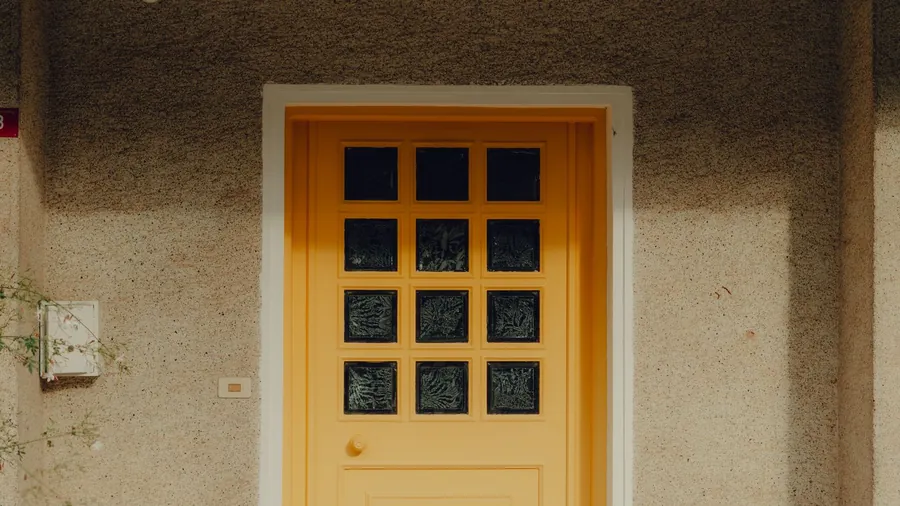
The regulations define “critical locations”, and there are two of them. The first is glazing in a door, and in any panel beside a door within 300mm of the door edge, anywhere up to 1500mm above floor level. The second is glazing in a wall or partition below 800mm above floor level. Anything in those zones has to be safety glass classified to BS EN 12600, or be small enough to count as a small pane, or be permanently protected by a guard. The full wording is set out in Approved Document K, protection from falling, collision and impact, which is free to download.
Bathrooms catch people out. There is no clause that says “bathrooms need obscure safety glass” - what happens is that bathroom and cloakroom windows are routinely set lower than the rest of the house, so a cill at 600mm puts the glazing straight into the second critical location. The same applies to the low panes under a stair landing and to full-height glazing beside a French door. On a Victorian terrace in Newtown or St Leonard’s, where original cill heights vary from room to room, the only way to know is to measure each one at survey. If a quote applies toughened glass to every opening in the house without a single note explaining why, that is a supplier covering themselves at your expense.
Obscure Glass And The One-To-Five Privacy Scale
Obscure glass is graded for obscuration on a scale from 1 to 5, where 1 is barely more than decorative and 5 means a shape pressed against the pane is unreadable. The number refers to privacy, not to how much light gets through - most patterned glass still transmits around 80% of daylight, which surprises people expecting a dark room.
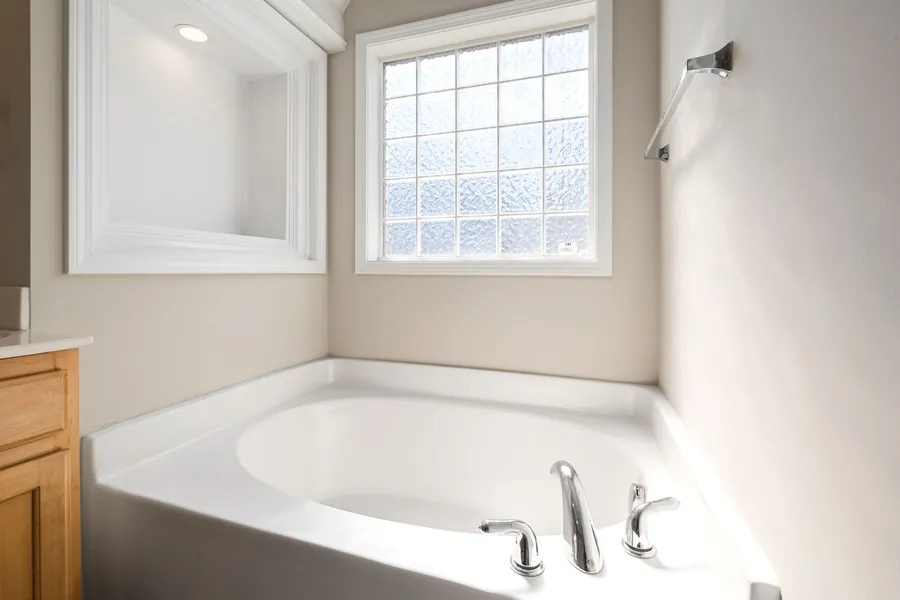
Level 5 patterns - Cotswold and Digital being the two most people end up with - are the right call for a ground floor bathroom, an en-suite overlooking a neighbouring garden, or anything facing a shared path. Level 4 patterns such as Stippolyte sit just below, softer but still unreadable at a metre. Level 3, Warwick and Mayflower among them, gives you a blurred but still readable view and suits a stair window, a landing, or an internal screen where the point is to break a sightline rather than eliminate it. Levels 1 and 2 are essentially textured decoration.
Two things trip people up. Pattern direction matters: the textured face normally goes inward on a bathroom window so the smooth face takes the weather, and getting it the wrong way round is one of the more common snags on an install. The second is that obscure glass can be toughened or laminated as well. The pattern is a property of the sheet, not a substitute for the safety classification, so a low-level bathroom window needs both.
Low-E Coatings, Argon And Warm-Edge Spacers
Low-emissivity glass is the reason a modern window outperforms one from 2004, and it is invisible. A microscopically thin metal oxide coating is applied to the cavity side of the inner pane, letting short-wave solar energy in while reflecting long-wave heat radiation from your radiators back into the room. Soft-coat Low-E, sputtered onto the glass in a vacuum chamber, reaches an emissivity of roughly 0.03 to 0.05 against about 0.15 for the older hard-coat process.
Argon fill is the second layer of the same story. It is denser and less conductive than air, and in a cavity of around 16mm it takes roughly 0.2 to 0.3 W/m²K off the unit’s U-value for a few pounds. Below about 12mm the gain shrinks. Above about 20mm convection currents start working against you. So unit thickness on a quote tells you something: a 28mm unit with a 20mm cavity is doing more work than a 24mm one.
The third component is the spacer bar around the perimeter. Aluminium spacers conduct heat straight across the edge of the unit. That is why older double glazing mists and streams at the bottom corners in January while the middle stays clear. A warm-edge spacer in stainless steel or a polymer composite cuts that bridge, improves the whole-window U-value by around 0.1 W/m²K, and makes a visible difference to edge condensation - relevant on Exeter’s damp river-valley mornings, and a related issue to the one covered in our guide to stopping condensation on windows. All three together are what produce a window energy rating; the British Fenestration Rating Council scale runs from E up to A++, and the calculation balances heat loss against useful solar gain rather than measuring insulation alone.
Solar Control Glass For South-Facing Rooms And Conservatories
Exeter gets more sunshine hours than most of England, and that shows up as a problem in exactly one type of room: a large south or south-west facing glazed space. The number that governs this is the g-value, the proportion of solar energy a unit lets through. Clear double glazing sits somewhere around 0.63 to 0.70, meaning roughly two thirds of the sun’s energy arrives in the room.
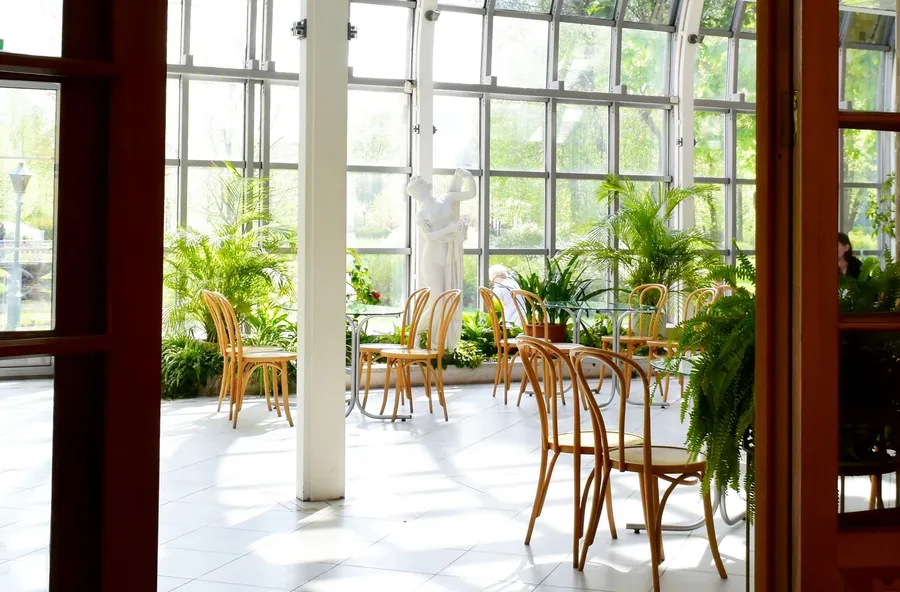
Solar control glass carries an additional reflective coating that pulls the g-value down to around 0.3 to 0.4 while still transmitting 60-70% of visible light. From outside you see a faint blue or neutral cast. From inside you barely notice it at all. On a conservatory roof or a big rear elevation in Exwick, Pinhoe or Alphington it is the single most effective fix for a room that hits the high twenties by noon in July, and it works passively - no blinds to close, no fan.
It is also the specification most often applied where it does no good. On north-facing and east-facing windows you actively want that solar gain, because it offsets winter heating. Fitting it across a whole house pushes the energy rating down and charges you for the privilege. Ask for it on the openings that overheat and nowhere else. The counterpoint is worth knowing too: if your problem is a conservatory that bakes in August and freezes in February, glass is only half the answer, and the roof usually matters more than the walls.
Self-Cleaning Glass And The Coastal Question
Self-cleaning glass carries a pyrolytic titanium dioxide coating fired into the outer surface during manufacture, so it cannot wear off with cleaning. It works in two stages. Daylight triggers a photocatalytic reaction that breaks down organic dirt on the surface, and the coating is hydrophilic, so rainwater spreads into a sheet and carries the loosened film away instead of beading and drying into spots.

For a gable window above a conservatory roof, a first floor rear elevation behind a garage, or anything you would otherwise pay a pole-system cleaner to reach four times a year, it pays for itself over about a decade. Pollen from the Exe valley in May, tree sap under the limes along the older Pennsylvania roads, bird mess - all organic, all within what the coating handles.
Salt is where the marketing outruns the chemistry. Sodium chloride carried in on an onshore wind is a mineral deposit, and a photocatalytic coating has nothing to react with. Properties at Exmouth, Dawlish Warren or along the estuary towards Topsham still need washing down after a winter gale, self-cleaning glass or not. It reduces routine grime and does nothing about salt haze. Buy it for access, not for the sea.
Georgian Bars And Astragals On Period Exeter Frontages
Anywhere with a Georgian or early Victorian frontage - the St Leonard’s terraces, parts of Southernhay, the older stretches of Topsham - the divided pane is the detail that carries the elevation. There are three ways to reproduce it in a sealed unit and they cost very differently.
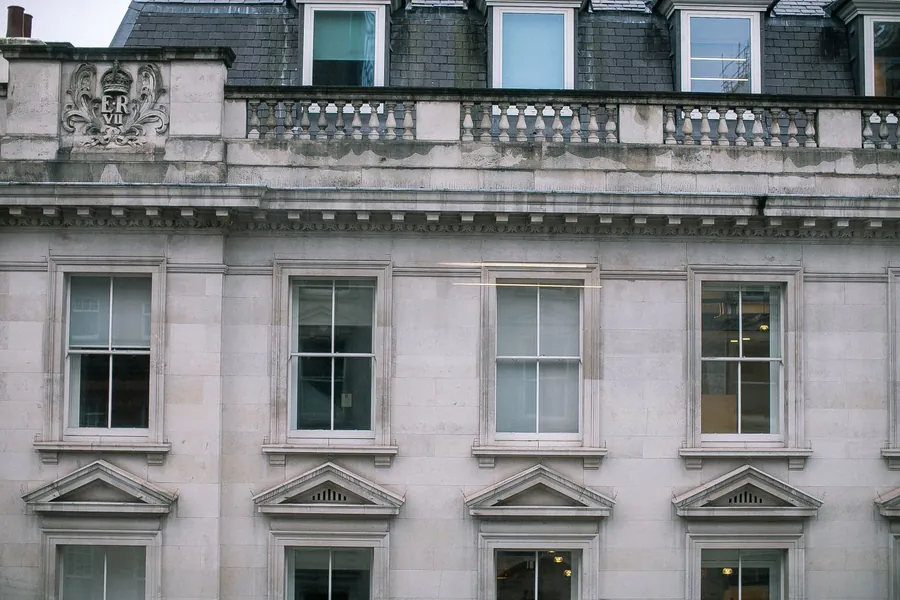
Applied bars are stuck to the outer and inner faces of the glass. Cheapest, and from across the street they look right. Stand at the gate and the flat profile and the unbroken cavity behind give them away. Duplex bars add a matching spacer bar inside the cavity, lined up with the applied bars, so the shadow line reads as a real division - a big improvement for a small increase. Genuine bars divide the opening into individually glazed panes, each with its own sealed unit. That is the only version that survives close inspection on a conservation-area frontage, and it prices accordingly.
Which you need depends less on taste than on who is looking. In an Exeter conservation area, or on a listed frontage, the planning position and the officer’s expectations drive the answer, and the bar profile and astragal section can be conditioned. We go into the design side of this in more depth in our post on Georgian bar windows in Exeter.
How To Read The Glass Spec On A Quote
A glazing spec is written as a string of thicknesses from outside to inside. “4mm Low-E soft coat / 20mm argon warm edge / 4mm clear toughened” tells you everything: a 28mm unit, coating on the inner pane, gas filled, warm-edge spacer, safety glass on the internal leaf. A quote that says only “28mm double glazed unit” has told you the thickness and nothing else, and that is the gap two prices usually hide in.

Six things to check before you compare. Which specific openings are marked as safety glass, and whether that is toughened or laminated. Whether the obscure glass is named by pattern and level rather than just “obscure”. Whether the Low-E is soft coat. Whether argon and a warm-edge spacer are included in the base price or added underneath. The window energy rating or U-value stated per window rather than for a single sample unit. And whether the installer is registered with a competent person scheme, which you can check on the FENSA homeowner pages - the certificate is what proves the glazing was signed off against Part K and Part L.
Rough numbers for an Exeter job: toughened adds about £15-£30 a unit, obscure £10-£25, laminated £30-£60, solar control £40-£80 per square metre, self-cleaning £30-£60 a unit, applied Georgian bars from about £25 a window. Low-E, argon and warm edge should already be in the base price on anything sold as A-rated.
Based on the quotes homeowners bring us to look over, something close to half the price gaps we are asked to explain turn out to be glass specification rather than workmanship. Written out pane by pane, the cheaper one is usually a different product, not a better deal. If you want that done with your own two quotes, book a free survey and ask for the spec in writing.
Frequently Asked Questions
Does every window in my Exeter house need toughened glass?
No. Approved Document K only requires safety glass in what it calls critical locations - glazing in a door or in the panel beside a door up to 1500mm above floor level, and glazing in a wall or partition below 800mm. A first floor bedroom casement with a cill at 900mm sits outside that, so standard annealed glass is compliant. Bathroom and cloakroom windows often do fall inside it, because they tend to be set lower than the rest of the house. Your installer should mark on the survey which openings are critical, and that marking should carry through onto the quote.
Is laminated glass better than toughened glass?
They do different jobs, so neither is simply better. Toughened glass is roughly four to five times stronger than ordinary glass and crumbles into blunt granules on impact, which is why it satisfies the safety rules cheaply. Laminated glass is two panes bonded around a plastic interlayer - it can still crack, but the pieces stay stuck to the interlayer, so the opening is not left clear. That is what makes it worth paying for on a ground floor rear window or a side return, and the interlayer also damps a few decibels of traffic noise and blocks most UV. On an accessible ground floor opening, laminated outer with toughened inner is the specification worth asking about.
What obscure glass level do I need for a bathroom?
Level 4 or 5 on the standard one-to-five obscuration scale. Level 5 patterns such as Cotswold or Digital make shapes unreadable even at close range, which is what you want on a ground floor bathroom facing a shared path in Heavitree or St Thomas. Level 3 patterns like Warwick still soften the view and suit a landing, stair window or an internal door screen where you want light and a bit of discretion rather than total privacy. Levels 1 and 2 are decorative more than functional.
Is solar control glass worth it on a south-facing Exeter room?
In a conservatory or a large south or south-west facing glazed area, usually yes. Exeter records more annual sunshine than most of the country and a clear double glazed unit lets roughly two thirds of solar energy through. Solar control glass cuts that to around a third while keeping most of the daylight, which is the difference between a garden room you can sit in during July and one you avoid. On ordinary north and east facing casements it is money wasted - you want that free winter heat gain.
Does self-cleaning glass work near the coast in Devon?
Partly. The coating breaks down organic dirt in daylight and lets rain sheet off rather than bead, so it genuinely reduces the film of pollen, bird mess and general grime on a hard-to-reach gable window. Salt spray is a mineral deposit, not organic matter, so at Exmouth, Dawlish or along the Exe estuary the coating does nothing about the white haze that builds up after an onshore gale. If the reason you want it is salt, it will not deliver. If the reason is a first floor window you cannot reach, it might.
How much do the extra glass specifications add to a window in Exeter?
As a rough guide on a standard casement, toughened glass adds around £15-£30 per unit, obscure patterned glass £10-£25, laminated £30-£60, solar control coatings £40-£80 per square metre and self-cleaning £30-£60 per unit. Applied Georgian bars run from about £25 a window, duplex bars more, and genuine individually glazed bars considerably more again. Low-E, argon and warm-edge spacers should already be included on any A-rated quote - if they are priced as extras, the base price you are being compared against is not the base price you thought.